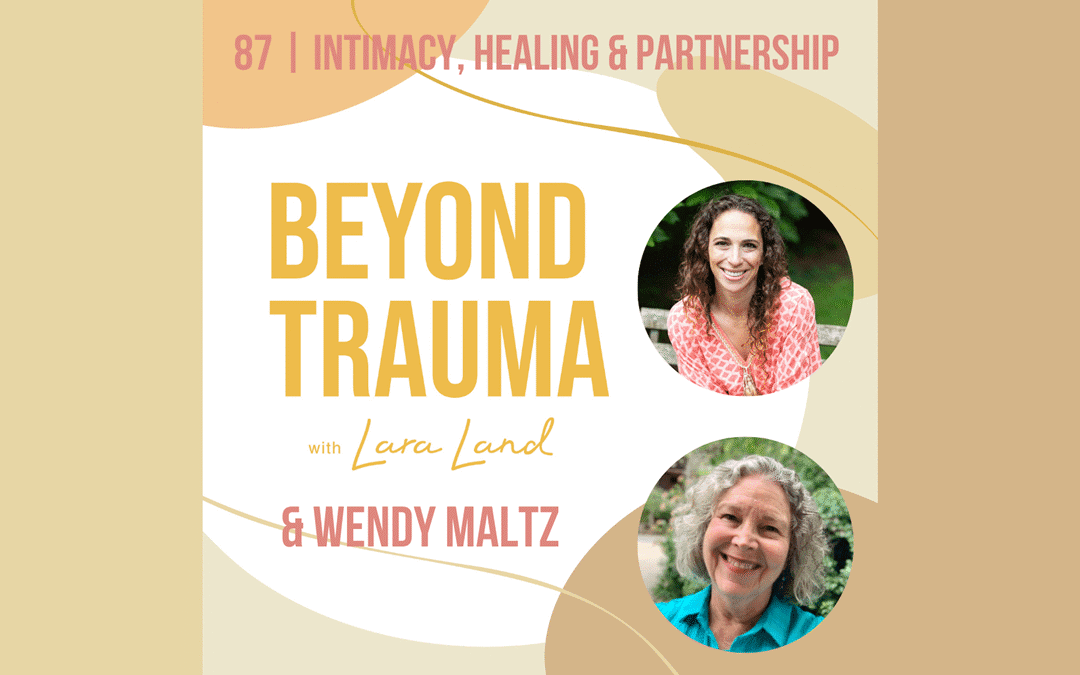
In this heartfelt episode of Beyond Trauma, Lara Land welcomes renowned sex therapist Wendy Maltz to explore how couples can reconnect and reclaim their bond—especially after stress, trauma, or emotional disconnection.
Whether you’re partnered or on a journey of personal healing, this conversation offers deeply compassionate guidance for cultivating conscious and connected relationships—with yourself or with someone you love.
The Quiet Ways Stress Erodes Intimacy
Stress doesn’t always show up as shouting or slammed doors. Often, it seeps in through everyday disconnection: the hurried goodbye, the missed check-in, the constant mental multitasking.
As Wendy explains, trauma survivors in particular may develop coping patterns that include emotional withdrawal, hypervigilance, or avoidance of touch and vulnerability. Over time, this can dampen intimacy—even when love remains.
“Stress creates distance. We don’t always see it, but we feel it—in our hearts, in our bodies, in our beds.” – Wendy Maltz
Creating Safety to Talk About Sex
Many couples avoid talking about sex because they don’t know how to do it without triggering discomfort or shame. Yet open, respectful dialogue is one of the most healing tools we have.
Wendy shares trauma-informed practices for initiating these conversations gently and building communication skills that encourage:
- Curiosity instead of judgment
- Consent and clarity instead of pressure
- Attunement to both words and body language
These practices echo what researchers at The Gottman Institute emphasize: emotional safety is the bedrock of long-term sexual connection.
What’s Your Shared Sex Mission?
One standout tool Wendy introduces is the Sex Mission Statement—a collaborative process where partners explore what they want their sexual relationship to feel like. For example:
- Is it playful? Sacred? Spontaneous? Healing?
- Are there goals around exploration or rebuilding trust?
- What boundaries and values need to be honored?
This exercise helps shift the focus from “how often” to “how meaningful”—and can be especially powerful for couples navigating the aftermath of trauma or medical challenges.
Foreplay Starts Long Before the Bedroom
Forget scented candles and perfectly timed playlists. According to Wendy, true foreplay begins with the energy we bring into the relationship throughout the day.
Do you greet your partner with warmth?
Do you show appreciation for small things?
Do you make room for tenderness even on busy days?
These everyday gestures act as emotional bids, a core concept from John Gottman’s research. Responding positively to these small connection attempts builds emotional safety in your relationship and can significantly boost intimacy and trust.
Balancing Closeness and Autonomy
Long-term partnerships thrive on two core needs: intimacy and independence. When one overtakes the other, the relationship can start to feel either suffocating or distant.
Wendy invites us to explore this balance. Healing happens not by becoming one entity, but by learning how to show up fully as ourselves—while choosing connection again and again.
Creativity as a Healing Force
Trauma can make the body and mind feel frozen. Wendy reminds us that playfulness and creativity—whether in sexual exploration, art, or movement—can reignite a sense of agency and aliveness.
Reframing sex as a space for empowered choice rather than performance or obligation is one of the most powerful shifts a trauma survivor can make. It replaces shame with curiosity, and fear with freedom.
Key Takeaways from Wendy Maltz
If you’re feeling disconnected—from your partner, your body, or your desires—this conversation is a beautiful place to start. Here are a few powerful practices to try:
- Identify daily stressors that may be impacting intimacy
- Create a shared sex mission statement with your partner
- Start foreplay in the morning—with kindness, eye contact, and warmth
- Talk openly about needs, boundaries, and desires
- Remember: healing intimacy is a journey, not a performance
Listen to the Full Conversation
🎧 Click here to listen to the full episode on Beyond Trauma
Additional Resources
- HealthySex.com – Wendy Maltz’s Resource Hub
- The Gottman Institute – Research-Based Relationship Tools
- RAINN – Resources for Survivors of Sexual Trauma
- Somatic Experiencing & Intimacy
Want More?
If this conversation resonated with you, subscribe to Beyond Trauma on iTunes or Spotify, share it with someone who might need it, and explore more healing-centered episodes here. Healing happens in community—and you don’t have to do it alone.