by Lara Land | Nov 28, 2022 | BOOKS, COACHING, COMMUNITY, LAND BLOG, LARA LAND, Self Improvement, SELF-IMPROVEMENT
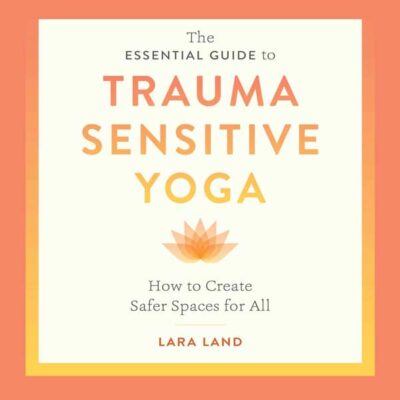
Many of you have likely heard about trauma sensitive yoga by now. You may even have read books on it such as The Body Keeps the Score, Waking the Tiger, and Why Zebras Don’t Get Ulcers. Perhaps you’ve pre-ordered my book, The Essential Guide to Trauma Sensitive Yoga. I hope you have. Yoga for trauma studies are getting more and more popular and more information is getting out there during this time when more folks than ever are identifying as having survived trauma or traumatic stress.
This is a change from the earliest studies we had which were largely from veterans. Most of the earliest trauma sensitive yoga programs were for veterans diagnosed with PTSD. Those programs proved again and again the power of trauma sensitive yoga to reverse the impacts of trauma, restore the nervous system and give folks a chance to change their response to traumatic stress.
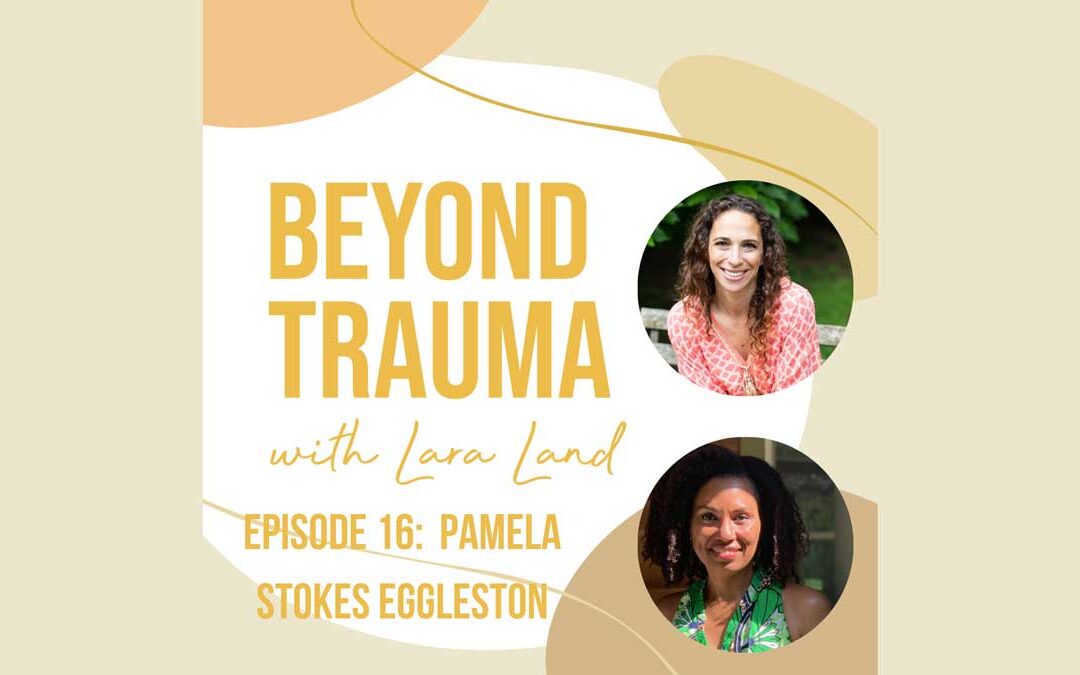
No one knows that better than the next guest of the Beyond Trauma Podcast. Pamela Stokes Eggleston has been sharing yoga years with Veterans suffering from PTSD or traumatic stress and their families. She was inspired to focus on this demographic after her own husband returned injured from service and she needed to learn how to live with that. The vicarious trauma she experienced from living with someone with PTSD also had to be addressed. Pam was able to address it with yoga and yoga related practices and one thing she was especially able to treat is sleep. This is deeply important because sleep is always disturbed with trauma and sleep disturbance makes the impacts of trauma more severe.
Take a listen to Pam on the Beyond Trauma Podcast to learn more about yoga for veterans and how she is improving their sleep and hers with some special practices.
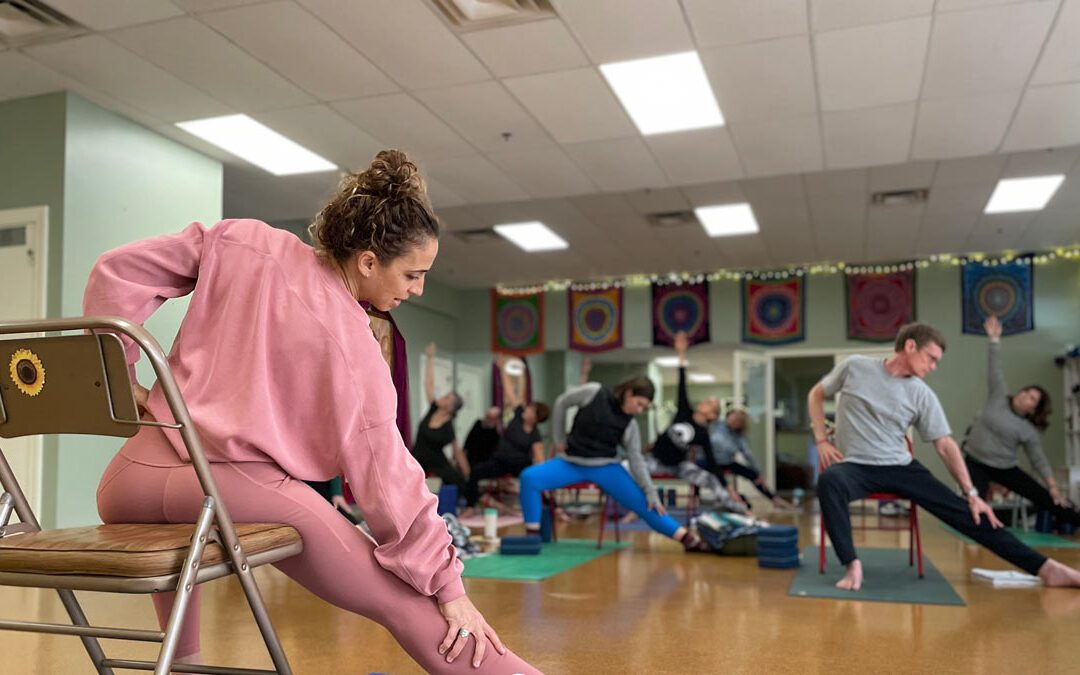
If this resonates with you, you may want to consider a trauma sensitive yoga training. I’m offering both an online trauma sensitive yoga training (this weekend) and in many person trainings in the coming year including the weekend of June 30th at Kripalu in Massachusetts (which will be listed next week) and the weekend of August 18th at Miami Life Center, in Florida. More to be listed soon!
by Lara Land | Nov 21, 2022 | BOOKS, COACHING, COMMUNITY, LAND BLOG, LARA LAND, Self Improvement, SELF-IMPROVEMENT
Much has been written about morning rituals and morning routines and for good reason. How we start the day informs the rest of the day. It is so deeply important. So much so, that even if I’m exhausted I will try my absolute best to get up before my daughter and husband to have even a few minutes to collect myself, give thanks, and get clear about my day.
Do not sleep on these moments!
I used to do a full Ashtanga Yoga practice as my morning ritual, a routine that lasted almost two hours with set up and break down. A combination of motherhood, covid, and revelations about the Ashtanga yoga founder changed that. Covid specifically caused me and many yoga practitioners and teachers I know to question and reconfigure our practices. What is the right morning practice and when is the time to change it? These are not easy questions by any means. They require thought as does anything we put our time and focus to.
Discipline is important as is sticking to a practice.
Yoga can teach us about discipline. Discipline is an important part of our evolution and can teach us about false perceptions of our limits and the heights we can reach. It can also be destructive when it pushes us too far and causes us to distrust important messages from our bodies. When is the time to give up on a practice that’s been beneficial? That’s a question only you can answer, but I’ll give you some hints to look for.
It may be time to switch up your practice if:
- Your life has had a dramatic shift.
- You’ve tried adapting it and you still don’t feel you are growing.
- You are clear that it isn’t for lack of discipline or an inner block around something in your practice you don’t want to face.
If you have changed some small things but even that won’t do it. Maybe you need a bigger change in your morning routine or yoga practice.
The essential question to ask yourself is what you are hoping to gain from your practice.
There are many different reasons folks practice yoga or other centering morning rituals. Ideas of why you may be practicing include: comfort, stress relief, connection to something bigger, the doctor said so, stretching, peace, creativity, evolution, inner knowledge, prayer, awakening, excellence, better at the job, nicer human, healthier, stronger, focused, etc
Different rituals provide different results so first decide what you are practicing for. From there you can figure out if you need meditation, yoga asana, pranayama, journaling, silence and stillness, stretching, prayer, nature, cold shower, morning pages, or other practices. You may need ten minutes or two hours to get the results you wish. It all depends. Just keep in touch with something.
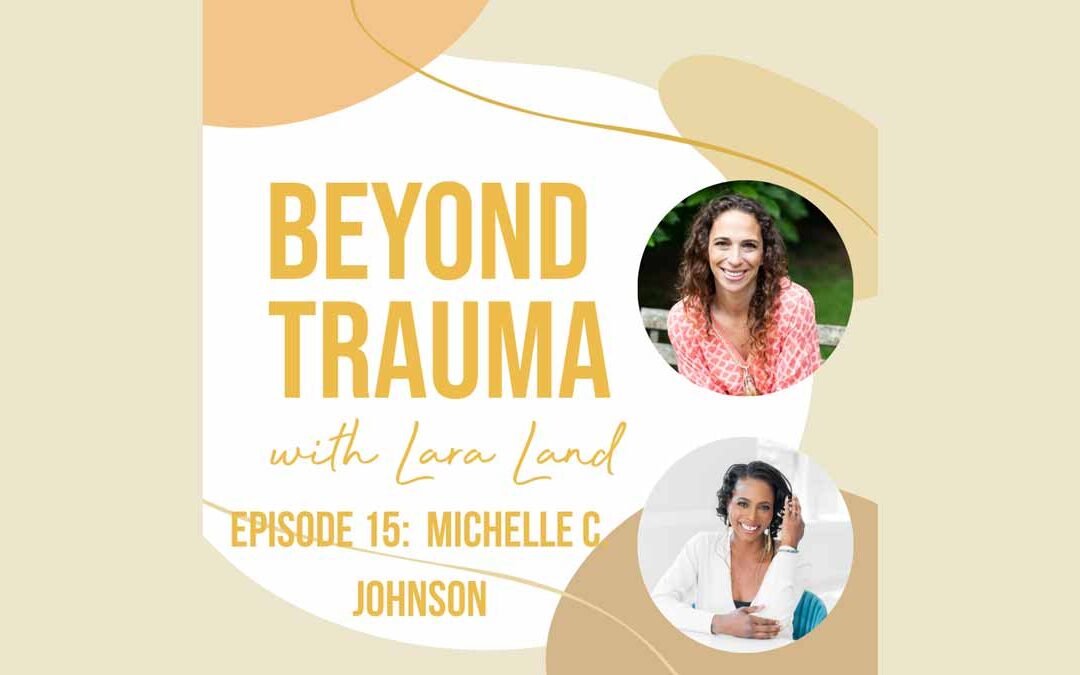
On the last episode of the Beyond Trauma podcast, Michelle Casandra Johnson and I talk about morning rituals and how these changing times are calling us towards new practices.
Take a listen HERE.
by Lara Land | Nov 14, 2022 | COACHING, COMMUNITY, LAND BLOG, LARA LAND, Self Improvement
As I’ve been interviewing folks for the Beyond Trauma Podcast, certain topics have come up again and again, reminding me that we are being called at this time to work with them. They leave something to be explored. Grief is one of those very present topics today. Many of my guests have referenced the grieving process and each time it has struck me as an important and timely topic.
Have you been grieving lately?
Many people experienced a lot of loss in the last years, not just in terms of people, but of the life they were leading and the future they imagined. And yet, no time, support, or roadmap was given to hold that grief. Most were forced back to work, many clocking way more hours than pre-pandemic with no breaks between meetings or mindless commutes.
What happens when you lose a life you never got to live?
Folks in war zones and regions struck by climate disasters face this trauma daily. We’ve experience this trauma also as whole industries have been destroyed and neighborhoods uprooted. We need time to grieve what was lost, our old restaurants, neighbors. So much has changed.
How much time and resources are given to folks to be in the grieving process is not the same for everyone. We favor minimizing the impact of our losses in favor of maximizing production, especially when losses occur in marganalized communities. If a person lost is not a family member why can’t the grief be just as bad? It can, but we don’t make room for it.
Many of us are afraid to feel. We worry that opening the space for sadness would leave us overcome and nonfunctional. Instead we armor up and become cold and cruel. We don’t know ourselves and each other because what we won’t look at in our own bodies we will not allow another.
There’s another way. Being together in our sadness is powerful and necessary. It’s not easy, but it’s the most healing and transformative work we can do. Now is the time to check into your grief and see what it wants to be telling you. Here’s one way to do it:
Find a quiet place and some stillness. Place both hands on your heart and let the muscles of your chest soften. Allow any realizations to come. Notice if you want to clench up, move away or distract yourself and instead return to the feelings. Stay for ten minutes in quiet and then journal anything you discovered.
This week on the Beyond Trauma Podcast, Michelle Casandra Johnson and I discuss grief as well as a number of other timely topics related to traumatic stress. Take a listen HERE
by Lara Land | Oct 24, 2022 | COACHING, LAND BLOG, LARA LAND, Self Improvement
In 2011 I opened Land Yoga, a yoga studio in Harlem a historically black community which I was living in. Then a few years later I formed nonprofit Three and a half acres Yoga to help me bring the practice of yoga to folks in the Harlem community who wouldn’t necessarily feel comfortable coming to my yoga studio. We’ve been training yoga teachers in trauma sensitivity and placing them in partnerships all over Harlem, Upper Manhattan, and the Washington D.C. area since 2015. Recently I was invited to Louisville, Kentucky to train yoga teachers there in trauma sensitive yoga and share my experience bringing yoga to trauma survivors. Here’s some of what I had to say at that training:
Very well-meaning white yoga teachers often want to bring yoga to folks they perceive as “under-resourced” and suffering from trauma, aka low-income black-bodied people. They come to me asking how to do so and/or why they don’t get folks turning out for their trauma-sensitive yoga classes when they are offered.
Here are some reasons why and some things you can do about it.
- You are not safe. White women have a long history of and still are causing harm to black bodied people. Trauma sensitive yoga is about reminding people of their agency but there is no experience of agency when one doesn’t first experience safety. You can’t bring a feeling of safety in a white body, maybe ever and definitely without a ton of work.
If black neighborhoods are really where you really want to bring yoga, start first by living in, working in, and serving in those neighborhoods in other ways. Build relationships, prove your consistency and dedication and listen and learn about what’s really needed and how you might be most helpful.
Don’t become a yoga missionary!
- It’s hard to hear as yoga lovers and teachers, but yoga may not be someone’s first or second or third priority. Yes, we know the practice can change lives, but so can job opportunities, access to healthy food, and resources schools. You are not necessarily what’s needed first or at this time, but you may be able to partner with community organizations offering those kind of resources to see how yoga, breath work, meditation and mindfulness practices might help them to achieve their goals and perhaps even keep their team from burn out.
Back the people already doing great work!
If I could go back in time, I’d take this lesson with me because it’s so true and valuable. There are probably folks already offering yoga in the communities you wish to reach. How can you support them? Back them? Throw resources behind them, and learn from them about what is needed. That’s true helping.
- Deal with white trauma. White bodies carry trauma from surviving traumatic events and from participating in the oppression of black and brown bodied people. Consider where in your own white neighborhoods yoga could be a helpful tool for waking people up to the ways they are causing harm. Could you get access to political spaces and decision makers and help them make better decisions? Could you do what we did with Three and a Half Acres yoga and get yoga to the police?
This avenue of using trauma-sensitive yoga to make systematic change, open eyes, and build white folks’ capacity for being in conversation about race, is where yoga is needed. White people need to be bringing the conversation and experience of yoga to a place that helps us release our need for power over, teaches us about security and enoughness, and guides us to share resources so we can all have a more equitable future.
If you are a yoga interested in learning more about how you can do this, check out the next trauma-sensitive yoga teachers training at Three and a Half Acres Yoga where applications are now open. Non teachers can help support our work with any level of donation!
by Lara Land | Oct 17, 2022 | LAND BLOG, LARA LAND, Self Improvement
How a new kind of affirmation made a difference for D’Angela.
*Trigger Warning
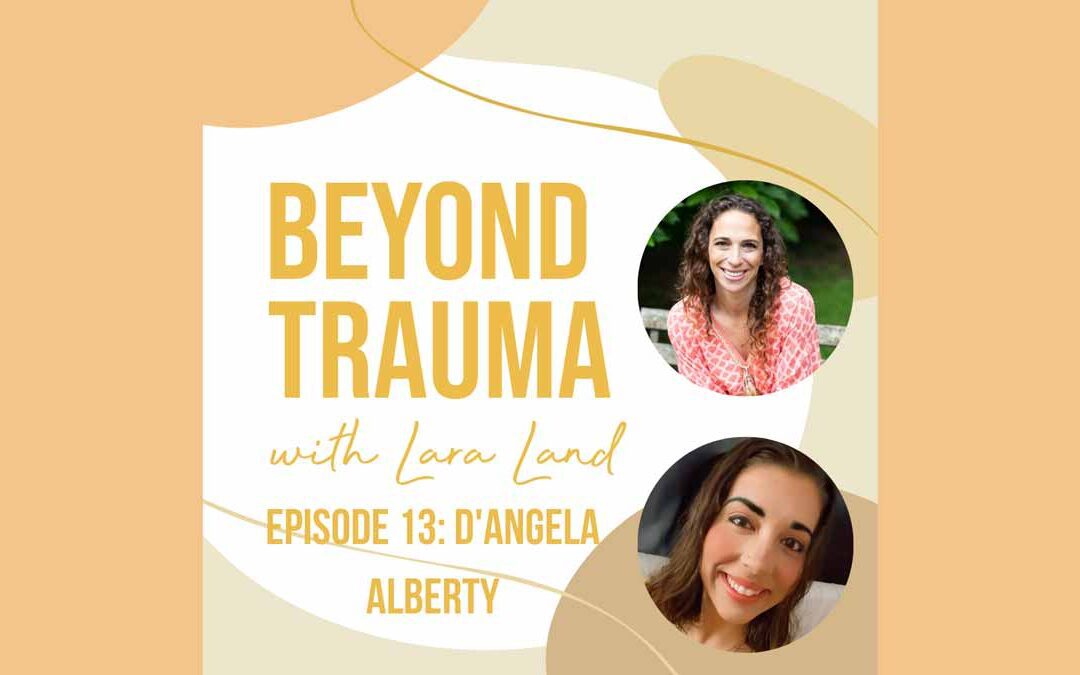
D’Angela Albery was born into the cycle of trauma. As a child she witnessed and was the victim of physical, emotional, and sexual abuse that began while she was in the womb. Never experiencing anything else, abuse was normal to her and she didn’t know that there could be another way. Yet, despite a campaign to make her feel worthless and trapped something inside of her told her to escape.
The story of D’Angela’s flee from her childhood home and subsequent detachment from her abusive partner is detailed in the latest episode of The Beyond Trauma Podcast. She shares the people and techniques which allowed her to understand her worth and break the cycle of trauma for her three small children.
One of those is using “What If” affirmations. When as a trauma survivor, speaking an affirmation was too much for D’Angela to believe in, she added the words “what if” to the beginning and she could start to imagine a different life.
Try it now:
What if I am smart?
What if I am worthy?
What if I am enough?
D’Angela is not just a trauma survivor. She is now a speaker, a coach, a trauma-sensitive yoga teacher and the program director at Three and a Half Acres Yoga. She is a true inspiration to all trauma survivors. Listen to her full story on iTunes or Spotify and get trained like her to be a trauma-sensitive yoga teacher this December at Three and a Half Acres trauma-sensitive yoga teacher training!
Highlight- trauma, trauma survivor, trauma-sensitive yoga, trauma-sensitive yoga teacher training, affirmations