In a world increasingly defined by polarization, complex systems, and competing interests, the question is no longer whether conflict will arise—but how we can transform it into creative, durable solutions.
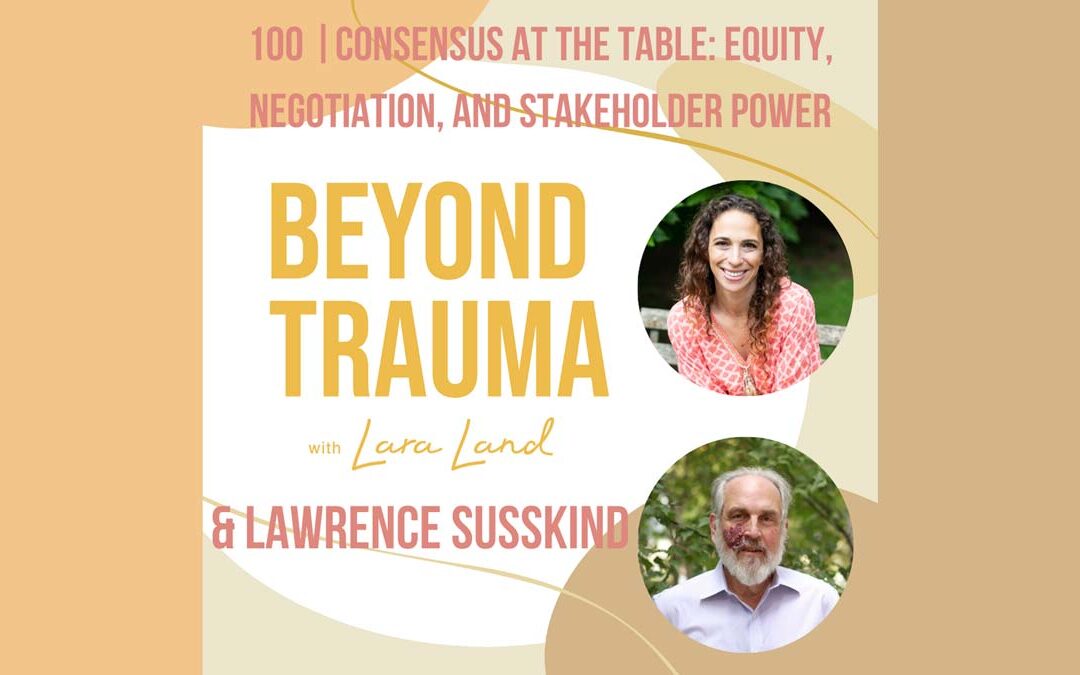
In a recent conversation with Lawrence Susskind—MIT professor, city planner, mediator, and pioneer of consensus-building—we explored how meaningful agreements are crafted in high-stakes environments, from urban planning to Arctic governance.
This blog weaves insights from our interview with Susskind’s decades of scholarship to illuminate a central theme: creative solutions emerge when we design processes that expand who participates, how they communicate, and how power is balanced.
The Pracademic Mindset: Bridging Theory and Practice
Susskind often describes himself as a “pracademic”—a practitioner and academic whose work bridges theory and real-world application. His books The Consensus Building Handbook (1999), Breaking the Impasse (1987), and Good for You, Great for Me (2014) illustrate this philosophy by translating negotiation theory into practical tools used in public policy, urban planning, and international environmental agreements.
Creative problem-solving begins with this mindset: knowledge must be tested in practice, and practice must inform theory. This iterative loop—reflection, experimentation, adaptation—is what allows negotiators and planners to move beyond zero-sum thinking.
Who Gets a Seat at the Table? Stakeholder Assessments as Creative Design
One of Susskind’s foundational contributions is the concept of the stakeholder assessment—a structured process to identify who should participate in a negotiation and how their voices should be represented.
In The Consensus Building Handbook, Susskind and his colleagues outline how stakeholder assessments uncover:
- Groups with formal authority
- Marginalized communities often excluded from decision-making
- Technical experts and local knowledge holders
Creative solutions depend on creative inclusion. When only the powerful are invited, outcomes tend to reinforce existing inequities. When diverse stakeholders are engaged, new ideas and hybrid solutions emerge—combining technical, cultural, and experiential knowledge.
Consensus Is Not Compromise: Lessons from Arctic Governance
Susskind’s work on Arctic shipping and fisheries governance highlights the complexities of negotiating across nations, cultures, and ecosystems. His research on transboundary environmental negotiations shows that consensus is not about splitting differences, but about inventing options that expand the pie.
In multi-party environmental conflicts, Susskind emphasizes:
- Joint fact-finding to create shared understanding of scientific uncertainty
- Scenario planning to explore future risks and opportunities
- Adaptive agreements that evolve as conditions change
These strategies reflect a core principle of creative negotiation: design processes that allow learning and innovation over time.
Ground Rules for Creative Negotiation
Susskind’s research consistently points to process design as the engine of creativity. In Good for You, Great for Me, he outlines negotiation ground rules that foster integrative outcomes:
- Focus on interests, not positions
- Separate people from the problem
- Generate multiple options before deciding
- Use objective criteria and shared data
By shifting from adversarial debate to collaborative problem-solving, negotiators can discover solutions that satisfy multiple interests simultaneously.
The Power of Neutral Facilitation
A recurring theme in Susskind’s work is the importance of neutral third-party facilitators. In complex negotiations, trust is fragile and power imbalances are pervasive. A facilitator helps:
- Structure dialogue
- Ensure marginalized voices are heard
- Prevent domination by powerful actors
- Maintain procedural fairness
Research in Breaking the Impasse and subsequent case studies shows that trusted neutral facilitation significantly increases the likelihood of durable agreements.
Creative solutions require creative process architects—people who design spaces where new ideas can safely emerge.
From Agreement to Action: Ensuring Follow-Through
Susskind’s scholarship also addresses a common failure point: implementation. Agreements often collapse when accountability mechanisms are weak. His work on dispute system design emphasizes:
- Clear monitoring and evaluation structures
- Joint oversight committees
- Built-in conflict resolution mechanisms
- Adaptive management clauses
Follow-through transforms negotiated text into lived reality. Without it, even the most creative agreements remain symbolic.
Cross-Cultural Communication and Trauma Sensitivity
In global and community-based negotiations, cultural differences and historical trauma profoundly shape participation. Susskind’s later work on intercultural negotiation underscores the need for:
- Cultural mediators and translators
- Recognition of indigenous and local knowledge systems
- Trauma-informed facilitation practices
Creative solutions are not only technical innovations—they are relational and psychological innovations. Designing processes that honor lived experience expands the range of possible outcomes.
Creative Consensus as a Design Challenge
Across Susskind’s body of work, a unifying insight emerges: consensus building is a form of social design. It requires intentional structures, inclusive participation, and adaptive learning. Creativity in negotiation is not accidental—it is engineered.
For urban planners, therapists, policymakers, and organizational leaders, Susskind’s research offers a blueprint for transforming conflict into collaboration. By expanding who participates, how knowledge is shared, and how power is balanced, we open pathways to solutions that would otherwise remain invisible.
In a world facing climate change, urbanization, and deep social divides, Susskind’s work reminds us that the process is the solution—and that when designed thoughtfully, it can unlock collective creativity at scale.
If you enjoyed this conversation, listen to the full podcast episode for deeper insights into consensus, power, and creative problem-solving.