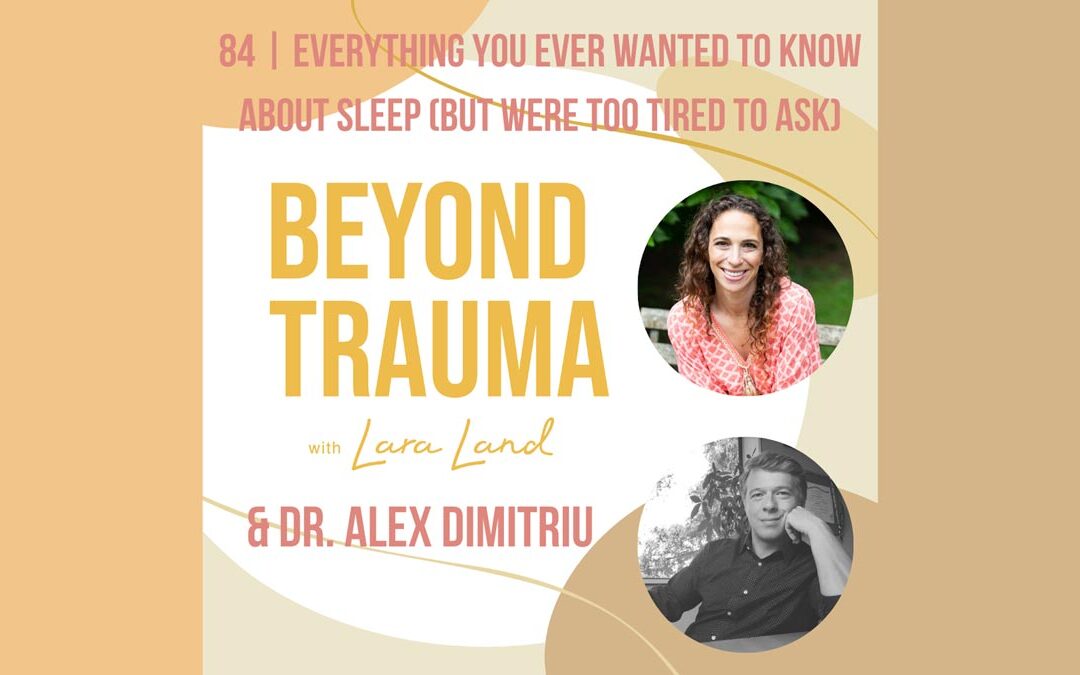
With insights from Dr. Alex Dimitriu, double board-certified in psychiatry and sleep medicine
If you’ve ever stared at the ceiling at 3 a.m. with your mind spinning, you’re not alone.
Sleep doesn’t come easy for many of us—especially those living with anxiety, trauma, or just the relentless pace of modern life. In fact, sleep is often the first thing to go when our nervous system is overwhelmed.
On a recent episode of Beyond Trauma, I sat down with Dr. Alex Dimitriu to unpack the complex, bidirectional relationship between sleep and stress. Together, we explored how poor sleep can increase anxiety—and how anxiety, in turn, sabotages rest. But here’s the good news: healing is possible, and better sleep is a cornerstone.
Whether you struggle with insomnia, wake up too early, or want to reclaim your evenings, this post will walk you through everything Dr. Alex and I discussed—along with my personal, proven tips for getting your best sleep yet.
🌞 The Morning Matters More Than You Think
One of the most surprising takeaways from my conversation with Dr. Alex? Your wake-up time is even more important than your bedtime. “Sleep pressure” builds throughout the day—and it starts the moment you get up.
Here’s what I recommend: get outside first thing in the morning. Just five minutes of natural sunlight tells your brain that it’s time to be alert—and sets your internal clock for better sleep later.
Avoid the snooze button, even if it’s tempting. Then, take a moment to set your intentions for the day. I use My Bliss Book—it’s how I stay grounded in what matters, which reduces stress and helps my mind wind down more easily at night.
☕ Coffee, Cortisol, and the Afternoon Slump
When it comes to coffee, timing is everything. Dr. Alex advises no caffeine after noon—and 11 a.m. if you tend to go to bed early. That post-lunch latte might seem harmless, but caffeine can stay in your system for 6–8 hours, disrupting your ability to fall and stay asleep.
Movement is also crucial. “Sleep is earned,” Dr. Alex told me, and that means building sleep pressure throughout your day. Whether it’s a walk, dance break, or yoga session, getting at least 30 minutes of activity helps your body crave rest by evening.
🌙 The Power of a Gentle Wind-Down
Too many of us try to go from 100 to 0—scrolling until our eyes blur, then wondering why we can’t fall asleep. But sleep doesn’t work that way.
Dr. Alex recommends creating a “slow-down runway” for your brain. I call it evening discipline—and here’s what mine looks like:
- Stop eating two hours before bed. Instead, curb cravings with a mug of MoonBrew hot cocoa, a magnesium-based drink designed to naturally relax the nervous system. (Use code LaraLand30 for 30% off your first order!)
- Dim the lights and ditch screens at least one hour before sleep. Blue light delays melatonin release.
- Avoid heavy emotional conversations at night. Your mind needs calm, not conflict.
This kind of gentle ritual tells your body: “It’s safe now. You can rest.”
🛌 Create a Sleep Sanctuary
Your bedroom should feel like a spa, not a stress zone. Dr. Alex emphasized that coolness and darkness are among the most important environmental factors for quality sleep. Studies back this up.
After years of trying different bedding, I finally found the sheets that help me sleep deeply: Cozy Earth. Their bamboo fabric keeps me cool all night, and honestly, they feel like sleeping on a cloud. Use code LaraLand for 40% off their sheets and pajamas. You will not regret it.
🧠 Sleep, Trauma, and the Nervous System
We also dove deep into how trauma and PTSD affect sleep. Dr. Alex calls it “battlefield sleep”—where the nervous system is still on alert, even in rest. That’s why trauma survivors may experience vivid nightmares, frequent wake-ups, or difficulty falling asleep. Here’s what science says.
Here’s what helps:
- Meditation: A regular practice helps train the body to feel safe and grounded. Research supports it.
- Visualization: Mentally walking through a calming scene or memory can help transition from alertness to rest.
- Sleep hygiene: Having the same wind-down each night builds trust and consistency in the body.
If you’re still struggling, Dr. Alex says it’s worth discussing medication with a professional. For treatment-resistant depression or trauma, ketamine therapy may be a powerful option—it’s fast-acting and has shown promise in restoring sleep in some patients.
🗺 Final Thoughts: Rest is Not a Luxury
Too many people think of sleep as optional. But in reality, your mental clarity, mood, decision-making, and healing capacity all depend on how well you sleep.
Here’s the truth: when you prioritize rest, you’re not being indulgent. You’re rebuilding your nervous system. And the effects ripple out into every area of your life.
Lara’s Essential Sleep Routine (Summarized)
Morning:
- Wake at the same time daily (no snooze!).
- Stand outside for 5 minutes of sunlight.
- Set intentions with My Bliss Book.
Afternoon:
- Move for 30+ minutes.
- No caffeine after 12 p.m. (11 a.m. if you’re an early sleeper).
Evening:
- No food two hours before bed.
- Drink MoonBrew with code LaraLand30.
- Dim lights, turn off screens one hour before sleep.
- Avoid stress or conflict before bed.
Bedtime:
- Make your bed a sanctuary.
- Use Cozy Earth sheets with code LaraLand for 40% off.
- Keep it cool and dark.
- Use meditation or visualization to transition.
If this post helped you, share it with someone who needs to sleep better—and subscribe to the Beyond Trauma podcast for more expert insights.
Sweet dreams,
Lara 💜
Write something…