AUTHOR OF MY BLISS BOOK & THE ESSENTIAL GUIDE TO TRAUMA SENSITIVE YOGA

Lara Land New Logo 2022

AUTHOR OF MY BLISS BOOK &
THE ESSENTIAL GUIDE TO TRAUMA SENSITIVE YOGA

Lara Land New Logo 2022
The Science and Practice of Forgiveness: Tools for Healing and Growth

The Science and Practice of Forgiveness: Tools for Healing and Growth

Forgiveness is often described as one of the most powerful tools for emotional healing—but it’s also one of the most misunderstood.


Research shows that practicing forgiveness can have tangible benefits for mental and physical health, including reduced stress, lower blood pressure, improved relationships, and enhanced emotional well-being (Toussaint, Worthington, & Williams, 2015). But forgiveness is not a one-size-fits-all process, and it doesn’t always mean reconciliation or condoning harmful behavior.

In this post, we explore what science says about forgiveness, different therapeutic approaches, practical tools to cultivate it, and important reminders that it’s okay to approach forgiveness on your own terms.


What Research Says About Forgiveness

Studies indicate that forgiveness can reduce chronic anger, anxiety, and depression, and even boost immune function (Freedman & Enright, 1996; Witvliet et al., 2001). Neuroscience research shows that engaging in forgiveness can lower activity in the amygdala (the brain’s threat center) while activating prefrontal regions involved in perspective-taking and empathy.

However, researchers also caution that forgiveness is voluntary and context-dependent. Forcing forgiveness before you’re ready can be harmful, and it is not necessary to forgive in order to heal. True forgiveness is about your own growth and freedom from lingering negative emotions, not about the other person.


Different Therapeutic Approaches to Forgiveness

1. Cognitive Behavioral Therapy (CBT)

CBT frames forgiveness as a process of reframing thoughts. It helps individuals identify maladaptive beliefs (“I must hold a grudge to stay safe”) and replace them with thoughts that promote psychological flexibility (“Holding on to anger keeps me stuck, not safe”). CBT-based forgiveness interventions often include journaling, cognitive restructuring, and empathy exercises.

2. Acceptance and Commitment Therapy (ACT)

ACT emphasizes accepting your feelings without judgment while committing to values-aligned action. In this model, forgiveness isn’t about changing the other person—it’s about releasing your own emotional burden so you can live in line with your values. Techniques include mindfulness, perspective-taking, and practicing compassionate self-talk.

3. Emotion-Focused Therapy (EFT)

EFT focuses on processing and transforming emotions. Forgiveness here involves experiencing and expressing the hurt, identifying unmet emotional needs, and cultivating empathy toward yourself and others. EFT helps you integrate the experience emotionally rather than suppressing it.


Three Practical Tools for Cultivating Forgiveness

  1. Micro-Forgiveness
    Start small. Forgive minor irritations or small past slights. These small acts build the “muscle” of forgiveness and help you practice releasing negative emotions safely. For example, if a coworker cut you off in a meeting, acknowledge your frustration, then let it go consciously instead of ruminating.

  2. Embodied Forgiveness
    Forgiveness isn’t just a cognitive act—it’s also physiological. Embodied forgiveness uses breathwork, body scanning, or gentle movement to release tension associated with anger and resentment. Sitting quietly, noticing sensations of tightness in your chest or jaw, and consciously relaxing them while repeating a phrase like “I release this burden” can integrate forgiveness on a deeper level.
  3. Future Forgiveness
    This technique prepares you for potential future hurt. Instead of reacting impulsively, you mentally practice responding with equanimity or compassion if a similar offense occurs again. This tool helps reduce anticipatory anger and fosters resilience, giving you a sense of control over your emotional response.


Important Caveats

  • You don’t have to forgive: Forgiveness is never mandatory; healing can occur without it.
  • Work with a professional: Gain a deeper understanding of your boundaries and needs before jumping full in.
  • Timing matters: It’s okay to wait until you are ready. Rushed forgiveness can be superficial or even counterproductive.
  • You don’t have to tell anyone: Forgiveness can be private and internal. You can release resentment without informing the person who hurt you.
  • Forgiveness ≠ reconciliation: Letting go of anger doesn’t require re-establishing trust or contact.


Final Thoughts

Forgiveness is a deeply personal and context-sensitive process. Research and therapy frameworks all agree that the act of forgiving is primarily about your own mental and emotional freedom. Using tools like micro-forgiveness, embodied forgiveness, and future forgiveness can make the process tangible, but it’s always valid to move at your own pace, set boundaries, and prioritize your own healing.

Forgiveness is not a destination; it’s a practice. And sometimes, the most powerful act of forgiveness is simply acknowledging your feelings and giving yourself permission to release them when the time is right.
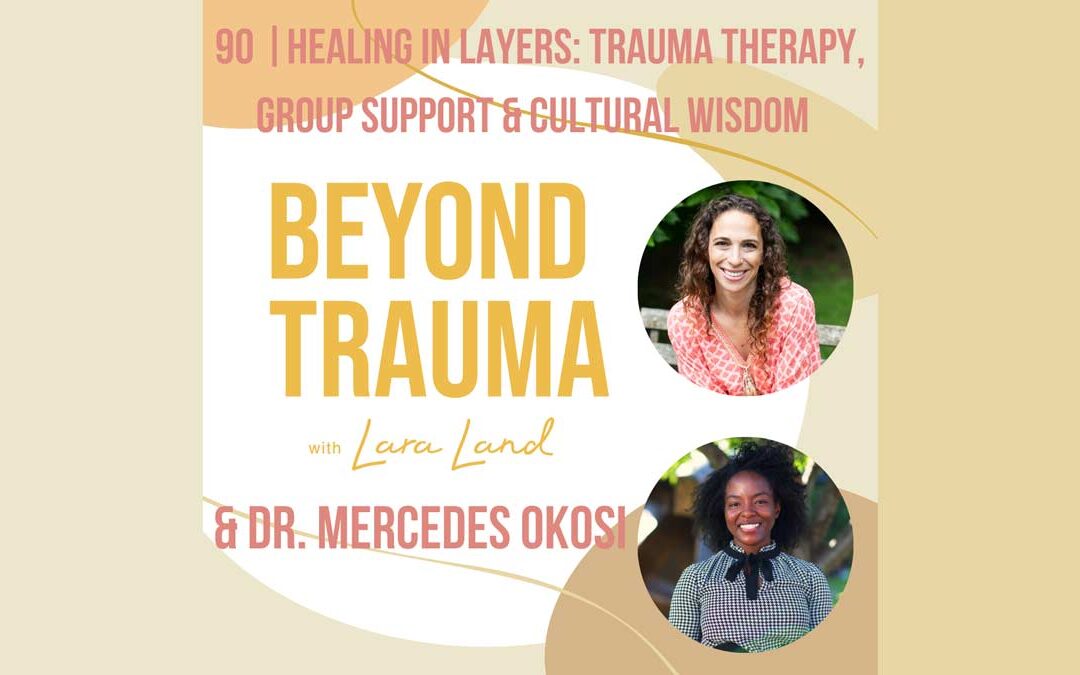
Healing Complex Trauma: Insights on Individual & Group Therapy with Dr. Mercedes Okosi

Healing Complex Trauma: Insights on Individual & Group Therapy with Dr. Mercedes Okosi

Healing Complex Trauma: Insights on Individual & Group Therapy with Dr. Mercedes Okosi

In this illuminating episode of Beyond Trauma, I sit down with Dr. Mercedes Okosi to explore the layered journey of healing complex trauma—what to use, when to use it, and how cultural context transforms the experience.

🧠 Trauma Therapy Approaches: Timing & Tools

Dr. Okosi highlights that no single intervention works for every stage of trauma recovery. Her go-to techniques include:

  • Prolonged Exposure (PE): A structured form of therapy that helps clients revisit difficult memories using present-tense narration and sensory detail—without flooding themselves. Research shows PE is one of the most effective treatments for PTSD and complex trauma.
  • Narrative Exposure Therapy (NET): By creating a meaningful life story, clients integrate fragmented traumatic events into a cohesive narrative—powerfully effective for chronic and multiple traumas

Dr. Okosi explains why using the present tense and sensory details in therapy helps build emotional tolerance without retraumatizing—creating a bridge between memory and healing.

🧘🏽‍♀️ Grounding, Avoidance & Emotional Flooding

Avoidance might feel protective in the moment, but long-term it contributes to emotional freezing and restricted living. Dr. Okosi emphasizes that avoidance reinforces stress, while mindful exposure builds resilience.

Inspired by PE, she guides clients through titrated exposure—a methodical way to face trauma in manageable doses, keeping emotional flooding out of reach.

Her favorite grounding exercises include:

  • Sensory awareness (“What five things can you see/hear/feel?”)
  • Slow, controlled breathing
  • Gentle body scanning—a tool to stay anchored in the present

🌍 Group Therapy & Community Healing

The conversation turns to support groups as therapeutic ecosystems where healing ripples out, not just in the individual. Group therapy offers:

  • Connection & shared experience—specifically helpful for immigrants and first-gen clients facing isolation
  • Motivation through witnessing others—empowerment grows when clients see peers moving forward.
  • Enforced trust and safety, even for shy participants—when intentionally held by a skilled therapist.

Dr. Okosi skillfully explains the different group formats—from trauma-focused and psychoeducational to peer-led—and how she adapts each to client comfort levels.

🌱 Cultural Wisdom in Healing

In work with immigrant families, Dr. Okosi emphasizes cultural humility and trauma-informed care to honor diverse values, beliefs, and experiences.

  • She uses tools like the culturagram to explore migration history, language use, and generational trauma patterns.
  • Issues like acculturation stress, intergenerational conflict, and stigma around mental health are addressed head-on—because healing happens within cultural systems, not despite them.

Dr. Okosi says:

“My goal is to help individuals feel authentic and real—to themselves, in their family, and in this culture.”

🛡️ Building Baseline Resilience

Daily mindfulness is not only a response to panic—it also fortifies your baseline emotional tone so you don’t easily topple when stress comes.

Dr. Okosi encourages clients to:

  • Establish a brief daily ritual (3–5 minute breathing or meditative pause)
  • Notice physical sensations tied to stress
  • Take small, restorative actions that support nervous system rest

This daily resilience practice makes big emotional moments feel less destabilizing.

🎧 For Therapists & Clinicians

Dr. Okosi reminds therapists to:

  • Advocate for clients within systems—while also acknowledging our own limitations
  • Foster space for client leadership during healing—not therapist control
  • Recognize when to bring clients into group settings—and when to build safety via one-on-one first

✅ Your Roadmap to Healing

Dr. Okosi’s integrative approach offers a clear path for healing complex trauma:

Step What It Builds
1. Evidence-based approaches (PE, NET) Capacity to face memory safely
2. Grounding & mindfulness Emotional regulation foundation
3. Community and group work Shared healing and motivation
4. Cultural humility & narrative integration Authentic identity and voice
5. Daily resilience practices Nervous system stability

🎙️ Listen to the Full Episode

Head to Beyond Trauma to hear Dr. Okosi share these insights in depth—and experience the warmth, wisdom, and practical tools she brings to the therapy room.

Harvesting, Wrapping Up, and Making Space: Reflections on the Autumnal Equinox 2025

Harvesting, Wrapping Up, and Making Space: Reflections on the Autumnal Equinox 2025

I’ve always felt the autumnal equinox deeply in my bones — that shift in light, the subtle exhale of summer, and a gathering inwards: of what I’ve built, what I’ve sown, what I need to release

This year feels especially potent. As I prepare to launch my practice as a psychotherapist, beginning to take clients this autumn, I sense the urgency of finishing things, of putting pieces in place, of feeling the last sweet fullness of this year before the colder months.

2025 numerologically sums to 9 (2 + 0 + 2 + 5 = 9), which in many traditions is associated with endings, closure, transformation, spiritual growth — a time to tie up loose ends. 

Over the past few weeks, I’ve been checking off things that feel as much rituals as tasks: finishing the New York Times Top 100 Books of the Century (ask me my favorites), stomping grapes at Dear Native Grapes (a bucket list item for years), apple-picking (yeah), having surgery (boo) and celebrating Rosh Hashanah — sweet fruit, making amends, and gathering family and community. These seasonal markers are embedded in us all: new school years, harvest festivals, thinning daylight, preparing stores, both inner and outer.

Here is a bit about what is stirring this year, and some practices and meditations that may help us align our energy with this time of harvest, closure, and preparation.

Traditions & Meanings of the Equinox / Harvest Time

Here are some traditions, both ancient and modern, that echo this time of gathering, finishing, remembering, getting ready:

  • Harvest festivals have been celebrated in many cultures around the world at or near the equinox. In Celtic-neopagan traditions, for example, the equinox is marked as Mabon, also called “Second Harvest,” a time for thanksgiving, sharing food, feasting on apples, squash, pumpkins, root vegetables, and balancing light and dark. 
  • In Britain, the historical Harvest Home festival involved gathering the last of the crops, community feasting, and rituals around the last sheaf of grain (sometimes made into a corn doll), gratitude, and preservation.
  • In Japan, there’s Autumnal Equinox Day (“Shūbun no Hi”) and the related Buddhist practice of Higan — a week around the equinox spent visiting ancestors’ graves, reflecting, and expressing gratitude.
  • Latvian traditions like Miķeļi (also called Apjumības, Appļāvības) celebrate around the equinox as a harvest festival, with rituals to honour the fertility of the land, gathering the final grains, leaving a small bundle of cereal in the middle of the field (tied to the deity or spirit “Jumis”) to ensure fertility in the next season. 
  • Myths like Persephone (Greece) touch on themes of the return to the underworld / dormancy and the ending of the growing season.

These traditions share certain threads: gratitude, gathering, harvesting literally and metaphorically; honoring ancestors or what came before; balance (day/night, light/dark); preparing, storing, preserving; letting go.

Also, one more fact: the Harvest Moon (the full moon closest to the autumnal equinox) historically was very important — its light allowed farmers to work late into the night to gather crops.

What I’m Feeling & What This Time Feels Like to Me

Here’s my own sense of this season:

  • It’s not just about finishing tasks, but also about finishing energetically. There’s a sense of weaving together all the threads I’ve been pulling on — relationships, learning, reading, creative work — and letting them settle.
  • There is sweetness in the fruit: literal apples, or grapes, or the books, or the moments of rest. There is also a soft grief: of what must end, of what must be left behind.
    3
  • And there’s a deep readiness: for a new cycle, for stepping into the next version of my work. Launching my psychotherapy practice feels like a threshold, and I see this equinox + numerological 9 energy as a potent moment of threshold.

Practices, Meditations & Journal Prompts for This Time

As you, too, move through this season, here are some practices (rituals, meditations) and journal prompts that may help you regulate energy, harvest your year, and prepare for the coming winter (inner & outer).

Practices / Rituals

  1. Harvest Feast / Sharing
    Invite friends or family to share a meal made from seasonal produce: apples, squash, root vegetables, preserved foods. Maybe have everyone bring something. Use the meal as a way to give thanks — not only for the food, but for the people, the lessons, and the labor of your year.


  2. Last Sheaf Ritual
    If possible, find something symbolic as a “last sheaf” — a bunch of herbs or flowers, a bundle of greens, even the last apple. Hold it, give thanks, decide what you’ll store (literally or metaphorically), and choose something to release. You might make a corn-doll, or simply collect something natural and place it on an altar.
  3. Ancestor / Gratitude Walk
    Walk outside (in a forest, orchard, neighborhood) gathering fallen leaves, apples, nuts, whatever you find. As you walk, silently or aloud, acknowledge what’s sustainable to keep and what must go. Optionally tie them together or bury them — offering to ancestors, or to earth, or simply releasing.
  4. Reflection & Closure Ceremony
    Light a candle; make a list of what you have achieved, what you have learned, what you want to let go. Some people like burning a list or letting it go in water (writing and dissolving). Let it be ritual: with intention, with acknowledgment of both shadow and light.
  5. Creating Intentions for Winter / Next Cycle
    After gathering and releasing, shift toward what you want to carry forward. What seeds do you want to plant metaphorically through winter (learning, relationships, writing, rest)? How will you prepare? What supports do you put in place (rest, structure, boundaries)? 

Meditations / Visualizations

  • Balance of Light & Dark
    Visualization: imagine a scale. On one side, light (learning, growth, achievements), on the other side, dark (letting go, endings, rest). See them in perfect balance. Allow each side to speak.


  • Harvesting the Field of Your Life
    Picture a field you’ve tended this year. Walk rows: some are fruitful, some need rest, some maybe overgrown with weeds. Harvest what’s ready, clear what must go, nourish what will rest, prepare soil (metaphorically) for what’s next.
  • Number 9 Ceremony
    Because 2025 is a 9-year: reflect on what cycles are ending. Maybe design a ritual around the number 9: 9 breaths, 9 moments of gratitude, listing 9 things you wish to carry forward, 9 things to release.

Journal Prompts

  • What chapters in my life feel like they are naturally concluding now?
  • What have I harvested this year — skills, insights, relationships — that I want to remember and carry forward?
  • What am I ready to release before the darker months, so I have more room (inner & outer)?
  • Where in my life do I feel imbalance (too much doing, not enough being; too much reaching forward, not enough rest)?
  • What seeds (projects, rest, relationships, learnings) do I want to plant this winter, that will blossom next spring?
  • How do I want to regulate my energy as daylight shortens, temperature drops, work deepens?
  • What amends (to self/others) feel right now, so I don’t carry them like weight into my new beginning?

Holding the Threshold

As the equinox arrives, I feel the threshold: the things I want to finish, the sweetness I want to savor, the ones I may need to let go. Launching a practice, stepping into this new professional chapter, I feel the earth beneath me shifting from abundant burst to slower, essential, deep.

If you’re reading this, whatever your story is, I hope you can use this moment — the balance of light and dark, the numerology of 2025, the harvests around you — to finish with clarity, to rest with peace, to enter the coming season with intention.

When Adult Children Cut Ties: Understanding Family Estrangement and How to Heal

When Adult Children Cut Ties: Understanding Family Estrangement and How to Heal

What happens when love isn’t enough to keep a family together?

In my recent Beyond Trauma podcast episode with renowned psychologist and author Dr. Joshua Coleman, we explored one of the most painful and complex experiences a parent can face: estrangement from an adult child.

With rising rates of adult child-parent cutoffs, more families are silently struggling with shame, confusion, and heartbreak. And while every situation is unique, the good news is this: understanding the underlying dynamics of estrangement can pave the way for insight, healing, and in some cases—reconnection.

A Changing Family Landscape

Dr. Coleman notes that today’s ideals around family are vastly different from those of previous generations. In the past, parent-child bonds were maintained out of duty, tradition, and societal pressure. Now, adult children are more likely to value relationships that support their emotional well-being—even if that means stepping away from family ties that feel harmful or invalidating.

Estrangement may stem from:

  • Unhealed childhood trauma
  • Emotional neglect or criticism
  • Lack of boundaries or respect for autonomy
  • Parental divorce or favoritism
  • Unaddressed mental health struggles
    You can read more about the growing trend of estrangement in this article in The New Yorker. 

When Therapy Leads to Estrangement

Surprisingly, even therapy can contribute to estrangement—especially when adult children begin identifying harmful patterns from childhood. Dr. Coleman cautions clinicians to be mindful not to pathologize parents or reinforce a victim-only narrative. Therapy should empower clients to set boundaries and develop tools for dialogue and repair.

Learn more about this delicate balance from Psychology Today’s coverage of family estrangement.

What Parents Can (and Can’t) Do

There’s no one-size-fits-all solution, but Dr. Coleman offers some deeply compassionate and practical advice:

  • Respect boundaries even if they feel hurtful or confusing.
  • Avoid defensiveness. It’s hard, but necessary.
  • Apologize without conditions. Owning past missteps without minimizing them is crucial.
  • Write an amends letter. Dr. Coleman suggests a carefully crafted letter over a call, as it gives the child space to process without pressure.

For guidance, his book Rules of Estrangement is a must-read.

The Power of a Well-Written Amends Letter

So much can be triggered in a clumsy or poorly timed apology. Dr. Coleman stresses the importance of avoiding blame-shifting, over-explaining, or “trauma-dumping.” Instead, focus on the impact of your actions, not your intentions.

He explains more about this process in this TEDx talk that explores the psychology of reconciliation.

After Reconnection: What Comes Next?

Reconnection doesn’t mean everything returns to the way it was. It’s a new phase of the relationship that must be navigated slowly and with humility.

That often includes:

  • New boundaries
  • A changed dynamic
  • Grieving old expectations
  • Continuing personal growth and accountability

For some, full reconciliation may never come—and that’s part of the process too. Healing doesn’t require that the relationship be restored; sometimes, it’s about making peace internally.

Final Thoughts

Dr. Coleman’s message is clear: parents must do the hard, internal work of acknowledging how their behaviors affected their children. That doesn’t mean they’re “bad” people—it means they’re human. And in owning that humanness, we open the door to possibility, healing, and deeper connection.

If you’re navigating estrangement or want to understand how to prevent it in your family, I highly recommend listening to the full Beyond Trauma episode, available wherever you stream podcasts.

You’re not

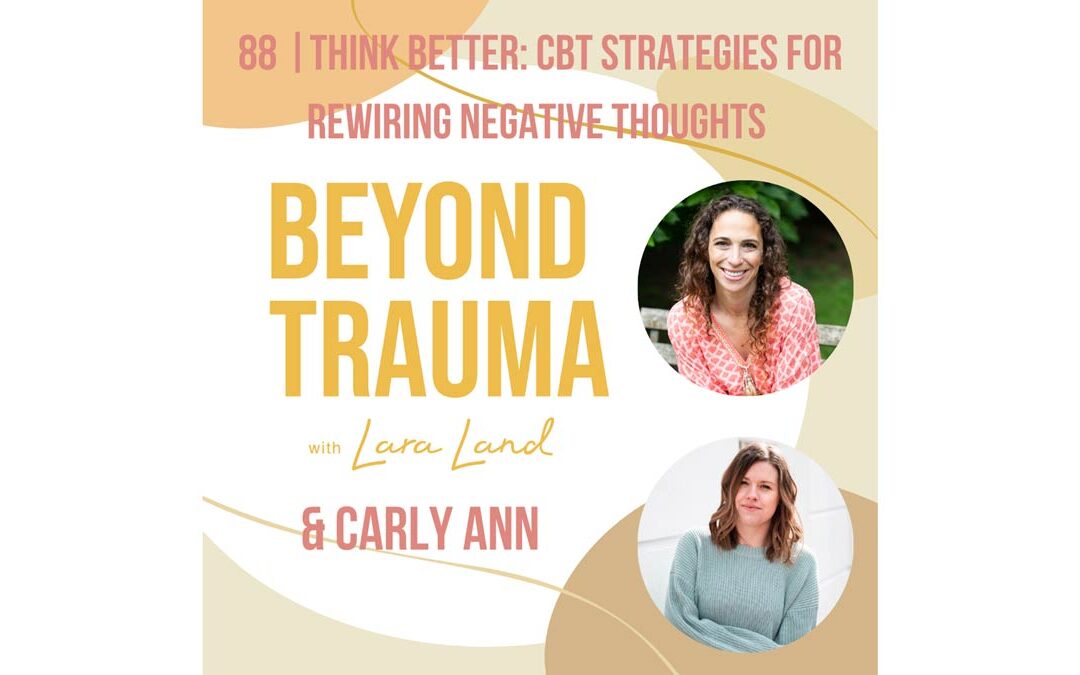
Think Better: CBT Strategies to Rewire Negative Thoughts and Reduce Anxiety

Think Better: CBT Strategies to Rewire Negative Thoughts and Reduce Anxiety

In this week’s episode of Beyond Trauma, I had the pleasure of sitting down with psychotherapist Carly Ann to explore the powerful principles of Cognitive Behavioral Therapy (CBT)—and how we can all use them to break free from the mental loops that keep us anxious, overwhelmed, and stuck.

Whether you’re navigating anxiety, low self-worth, perfectionism, or the emotional fallout of trauma, CBT offers real, research-backed tools for reclaiming your thoughts and calming your nervous system.

“It’s not about asking: Can I stop having these thoughts? It’s about asking: Can I stop feeding them?” — Carly Ann

Here’s a breakdown of what we covered, plus additional insights and resources you can use to deepen your healing.

What is CBT—and Why Does It Work?

CBT is a short-term, evidence-based approach to mental health that focuses on identifying and challenging negative automatic thoughts (NATs) and replacing them with more balanced, helpful thinking.

Research consistently shows CBT’s effectiveness in treating anxiety disorders, depression, PTSD, and even chronic pain and insomnia. The American Psychological Association recognizes CBT as one of the most effective tools for managing trauma-related symptoms.

Common Cognitive Distortions: Are These Running Your Life?

Carly and I explored the mental patterns that often fuel anxiety and low self-worth. These include:

  • Catastrophizing – assuming the worst will happen
  • Black-and-white thinking – seeing everything as all good or all bad
  • Should/Must statements – rigid rules that often lead to guilt and frustration
  • Mind reading – assuming you know what others think of you

You can see a full list of distortions here from Therapist Aid, and use them to start identifying your personal thought patterns.

How to Deal with Anxiety: Don’t Feed the Thoughts

One of the most helpful reframes Carly shared was this: You don’t have to stop your thoughts—but you can stop giving them power.

This aligns with the CBT skill of cognitive defusion, a technique also used in Acceptance and Commitment Therapy (ACT), where we learn to observe thoughts without becoming entangled in them.

When anxious thoughts arise, try asking:

  • Is this thought helpful?
  • Is it true—and can I prove that?
  • What would I tell a friend who had this thought?

The Thought-Feeling-Behavior Loop

In CBT, we recognize that how we think influences how we feel, and how we feel influences what we do. This is the cognitive triangle—and understanding it can help you make powerful shifts in your behavior.

For example:

  • Thought: I’m going to fail at this presentation.

  • Feeling: Anxious, inadequate.
  • Behavior: Procrastinate or avoid preparing.

By challenging the original thought, you can interrupt the whole cycle and act from a more grounded place. Tools like a CBT thought record can be a great place to start.

“Eat That Frog” and Morning Mindset

Carly and I also talked about the importance of starting your day with clarity and intention. We both love Eat That Frog by Brian Tracy—a simple yet powerful guide for overcoming procrastination by tackling your hardest task first thing in the morning.

Research suggests that the first 30 minutes of your day significantly influence your mood and productivity. Try:

  • Avoiding your phone
  • Doing a short journaling or meditation practice
  • Planning your top 3 priorities

Even small shifts can reduce anxiety and create a stronger mental foundation.

The Role of Affirmations—And When They Backfire

We also touched on positive affirmations—and the important distinction between toxic positivity and balanced thinking.

While saying “I love myself” might help some people, it can feel fake or even harmful if it’s too far from what you believe. Instead, CBT encourages neutral or balanced thoughts, such as:

  • “I’m doing the best I can right now.”
  • “It’s okay to feel anxious—this doesn’t define me.”

For more on this, check out this article on how affirmations can sometimes backfire—and what to do instead.

Are Your Needs Reasonable? And What to Do When They’re Not Met

Carly also shared how CBT can help us evaluate the expectations we place on others. We often assume people “should” know how to meet our needs—but haven’t communicated them clearly, or don’t know how to process the pain of those needs being unmet.

CBT invites us to:

  • Ask: Is my request clear and realistic?

  • Consider: Is the disappointment about this person—or about something deeper I need to grieve?

Dr. Marshall Rosenberg’s Nonviolent Communication method can help here—focusing on needs rather than judgments or demands.

Support for Clinicians

If you’re a therapist, Carly shares insightful guidelines for using CBT with clients experiencing depression or low motivation. She emphasizes pacing, collaborative exploration, and validating the emotional reality while gently challenging unhelpful thoughts.

Final Thoughts: Think Better, Feel Better

You’re not broken for having negative thoughts. They’re part of being human. But with awareness and the right tools, you can stop letting them run the show.

If you want to go deeper, listen to the full episode with Carly Ann here. And if CBT has helped you, or you have questions about starting, I’d love to hear from you in the comments or on Instagram @laralandyoga.