by Lara Land | Oct 17, 2022 | LAND BLOG, LARA LAND, Self Improvement
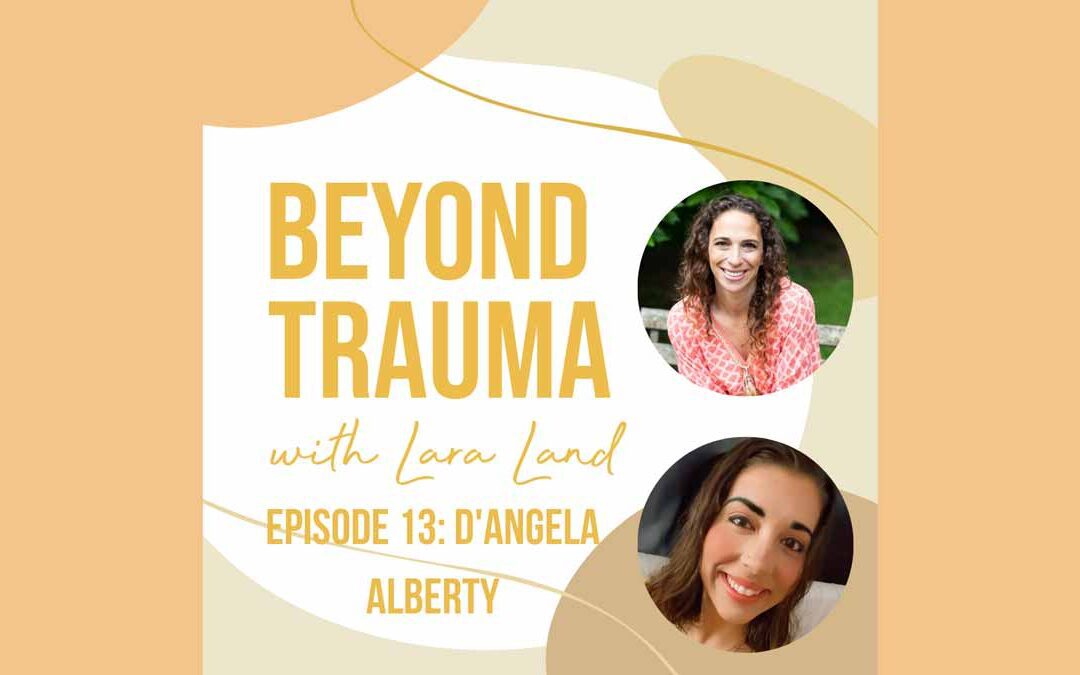
How a new kind of affirmation made a difference for D’Angela.
*Trigger Warning
D’Angela Albery was born into the cycle of trauma. As a child she witnessed and was the victim of physical, emotional, and sexual abuse that began while she was in the womb. Never experiencing anything else, abuse was normal to her and she didn’t know that there could be another way. Yet, despite a campaign to make her feel worthless and trapped something inside of her told her to escape.
The story of D’Angela’s flee from her childhood home and subsequent detachment from her abusive partner is detailed in the latest episode of The Beyond Trauma Podcast. She shares the people and techniques which allowed her to understand her worth and break the cycle of trauma for her three small children.
One of those is using “What If” affirmations. When as a trauma survivor, speaking an affirmation was too much for D’Angela to believe in, she added the words “what if” to the beginning and she could start to imagine a different life.
Try it now:
What if I am smart?
What if I am worthy?
What if I am enough?
D’Angela is not just a trauma survivor. She is now a speaker, a coach, a trauma-sensitive yoga teacher and the program director at Three and a Half Acres Yoga. She is a true inspiration to all trauma survivors. Listen to her full story on iTunes or Spotify and get trained like her to be a trauma-sensitive yoga teacher this December at Three and a Half Acres trauma-sensitive yoga teacher training!
Highlight- trauma, trauma survivor, trauma-sensitive yoga, trauma-sensitive yoga teacher training, affirmations
by Lara Land | Oct 10, 2022 | LAND BLOG, LARA LAND, Self Improvement
Three and a Half Acres Yoga is a nonprofit I founded in 2015. We broaden access to yoga, breathing and mindfulness techniques, focusing on communities who have experienced trauma. Our classes and training support individuals and teachers alike in recognizing their power for positive change. We believe every yoga teacher needs training in trauma sensitivity and that everyone deserves access to a yoga experience, free of harm, regardless of age, race, gender, sexual orientation, ability or class.
Our 20-hour virtual Trauma-informed Yoga Teacher Training (TIYTT), designed for 200+ hours certified yoga teachers, is back this December featuring Lara Land, Nikki Walker, and Jaime Brown, along with two NEW instructors who are experts in their fields, Ali Seidenstein and Tristan Katz.
We cover:
- How to define and look for trauma
- What happens to the mind/body system during and after a traumatic event
- The ways in which yoga can regulate the nervous system
- Specific practices for grounding, awakening awareness, and centering
- Common trauma triggers and how to avoid them
- Ways to reframe your teaching to increase accessibility
- How to teach yoga from a chair
- Room set up and teaching in unconventional yoga spaces
- Mindfulness and self care for the trauma informed yoga teacher and why that is important
- Self knowledge and awareness and privilege in the yoga room
We are so proud of this amazing lineup of instructors which is why we’re offering a full overview on each instructor as well as what you can expect from their sessions below:
Our 20-hour virtual Trauma-informed Yoga Teacher Training (TIYTT), designed for 200+ hours certified yoga teachers, is back this December featuring Lara Land, Nikki Walker, and Jaime Brown, along with two NEW instructors who are experts in their fields, Ali Seidenstein and Tristan Katz.
We are so proud of this amazing lineup of instructors which is why we’re offering a full overview on each instructor as well as what you can expect from their sessions below:
Lara Land
Lara Land is the Founder and Executive Director at Three and a Half Acres Yoga (THAY) and a Level 2 authorized Ashtanga Yoga teacher with 2 decades of yoga experience. She has worked all over the world teaching yoga and mindful living and developing programs to heal and empower.
In 2008-2009, Lara spent three months in post-genocide Rwanda bringing yoga as healing to survivors and from there went to India where she worked with HIV positive children bringing yoga and meditation to their treatment room. In June 2011, Lara opened Land Yoga, a ground floor Yoga, Arts, & Wellness Center in the heart of Harlem. Through Land, she developed programs such as Harlem Earth Day, SOULFest NYC, and Women Who Wow, landing her recognition in The Wall Street Journal, The Daily News, and on Fox5.
About Lara’s Session
Lara is the Lead Instructor of THAY’s TIYTT Program. In this training she delves into the causes of trauma and its impact on our bodies, the brain science around physiological regulation, and how we can soften the influence of trauma through embodied practices. Lara helps yoga teachers consider their definition of yoga and how they can share it with others in a safer way starting with room set up and continuing through savasana and everything in between. Lara will also talk about self care for yoga teachers, mindfulness and how to avoid burn out.
Follow Lara on Instagram
@laralandyoga.
Nikki Walker
Nikki Walker has been a THAY Trauma-informed Yoga Teacher since June 2018 and is also certified in Kundalini Yoga. Nikki, spiritual name Charan Kavita Kaur teaches at The Bridge, TOP Goddard Riverside, New Beginnings, and Thrive for Life. Teaching trauma sensitive yoga always inspires and deepens her love for yoga.
About Nikki’s Session
Description of Healing with Naad & Laughter: Healing with Naad and Laughter introduces yogis to some healing teachings of Naad (sound current from everyone’s divine body) and the healing power of laughter. Nikki believes that bringing the power of the mind, body, and the breath can truly change the world, especially if you’re ready for the journey.
Follow Nikki on Instagram
@nikkiwalker8277.
Jaime Brown
Jaime Brown (she/her/hers) is a lifelong learner, Diversity, Equity, Accessibility, and Inclusion (DEAI) practitioner, and wellness advocate. Choosing to focus on her physical wellness, Jaime became a Registered Yoga Teacher in August 2019. Jaime has 300+ hours of yoga training, ranging from yoga sculpt to trauma-informed practices. Jaime completed the THAY training virtually in May 2020. Outside of yoga, Jaime works as a DEI Lead in NC local government and is an Adjunct Instructor at Georgetown University. She is also a new mother of a baby boy born in January 2022 and an MBA student.
About Jaime’s Session
Participants should expect to learn Diversity, Equity, and Inclusion (DEI) fundamentals and how to incorporate inclusive practices as well as balance, energy, and vibes.
Follow Jaime on Instagram
@withjaime_.
Ali Seidenstein
Ali Seidenstein is a yoga teacher with almost 20 years of experience. She brings with her an abundance of knowledge through both her MD and PhD studies as well as her time living and studying in India for 3 years.
Previously, Ali was a faculty at NYU in the Biomolecular Engineering program where she remains a premedical advisor. Ali’s PhD thesis with Dr. Brad Aouizerat at the Bluestone Clinic at NYU focuses on epigenetics, particular gene expression changes in response to trauma and PTSD. She is currently applying for residency in Orthopaedic Surgery. Ali holds a BS in neuroscience, an MS in molecular biology, and is the founder of the nonprofit organization, Kids Who Care, Inc., wielding over 20 years experience in advocacy and leadership.
About Ali’s Session
Ali’s lecture focuses on epigenetics and how our experiences can change our physiology. The session discusses the role that trauma and PTSD can have on a cellular and neurological level. Additionally, how through understanding these changes we can start to take action to positively influence these aspects. Utilizing these resources we will explore practices that when done even five minutes at a time can facilitate our ability to return to our body.
Follow Ali on Instagram
@ahseidenstein
Tristan Katz
Tristan Katz (they/them) is a writer, digital strategist, and equity-inclusion facilitator who specializes in education and consulting centered around queer identity and trans awareness with an anti-oppression and intersectional lens, along with justice-focused marketing programs for yoga and wellness professionals.
Tristan was named one of Yoga Journal’s 2021 Game Changers and they were awarded the Reclamation Ventures grant in Spring 2021 to expand their offerings and dedicate time to writing their first book, title forthcoming. Through their podcast, articles, digital resources, and workshops, Tristan supports those who seek to grow their work while staying aligned with the practices of equity, justice, and inclusivity.
About Tristan’s Session
In this workshop, we’ll explore awareness around 2SLGBTQIA (and especially trans) identity and language as a vital component for creating safer spaces, why our individual and collective healing is tied to breaking down cis-hetero norms, and how yoga teachers and space-holders can practice inclusivity and allyship with the 2SLGBTQIA+ community. This session will include an exploration of terminology, pronoun considerations, what to do when you mess up, and more.
Follow Tristan on Instagram
@tristankatzcreative
Join us on Saturday, December 3, 2022 and Sunday, December 4, 2022.
Yoga teachers who graduate from our program gain access to our network of over 140 trauma-informed trained yoga instructors, volunteerships and potential for paid yoga teacher positions at THAY’s notable partner organizations and nonprofits, and educational and professional development opportunities including subscription to THAY’s graduate membership program.
We are also offering a limited amount of scholarships to teachers who need financial assistance. Eligible yoga teachers would gain full access to this training at no cost.
*Scholarship applications are due on Friday, November 4, 2022.
Our scholarship opportunities are made possible thanks to our generous funders including the West Harlem Development Corporation and lululemon Here to Be. you can expect from their sessions below:
Follow us on Facebook and Instagram to join our community.
by Lara Land | Oct 3, 2022 | LAND BLOG, LARA LAND, Self Improvement
There’s been a lot of controversy in recent years over the role of the teacher in yoga and in other wellness modalities, and rightfully so. Too often we give ourselves over to a guru, eager to release ourselves from having to do the hard work of designing and committing to our own path to healing. With all our many responsibilities in modern life, it can feel great to surrender.
We have seen, however, the dangers that come with that kind of surrender, especially for trauma survivors, who need perhaps more than any of us to establish their own path to healing and be supported and affirmed in it. What is their route then? Can they or any of us take a teacher?
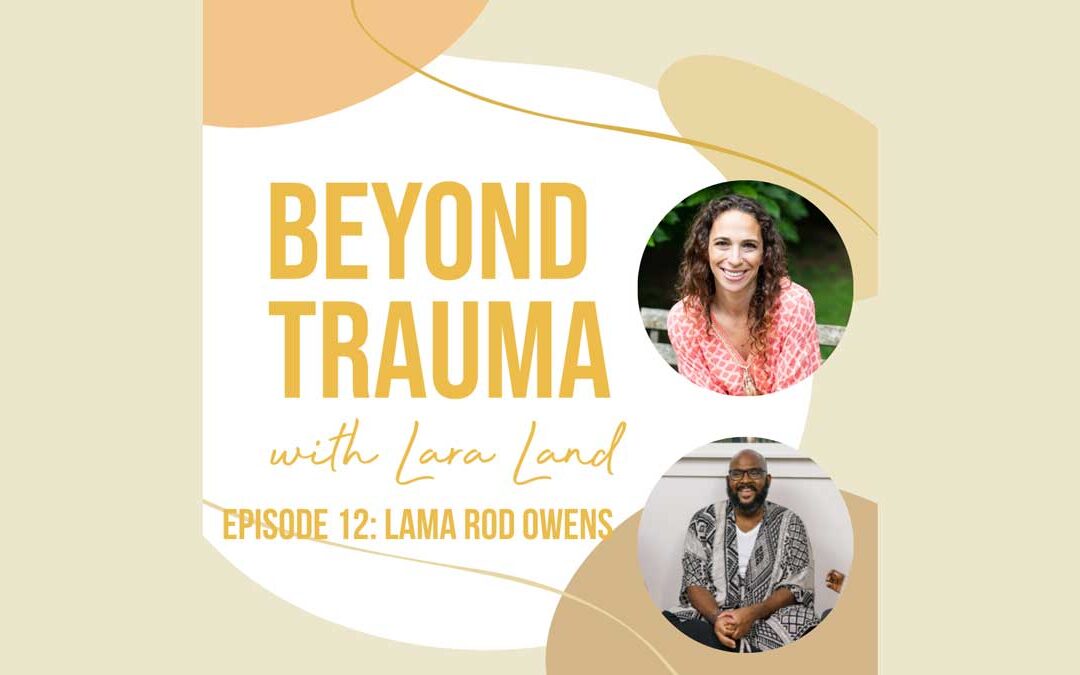
The truth is that teachers, guides, counselors, and maybe even gurus play strong roles along our path. Sometimes, as in the case with, Lama Rod Owens, my latest guest on the Beyond Trauma Podcast, just being in their presence is enough to make us feel calm. Other times, it’s their knowledge, charisma, or life experience that draws us to them. There are so many things that others have to teach us.
It’s the teachings, Lama Rod reminds us, that we should take refuge in and surrender to, not the fallible human!
The teacher is there to translate the teachings for us and, if they are truly in practice and living them, to show us that it is possible. They do not make it possible to skip the work of dealing with our own traumas and reactions as trauma survivors or however we identify as students and ever-growing humans.
That there is really hard work to do to liberate ourselves from conditioning and that it can be done are some of the core teachings I received from being in this conversation and some of the messages I also convey to my students.
In my life coaching, with folks, trauma survivors or not, for instance, I am always careful to be clear about what I can and can not do for my clients:
- I can ask questions that may point you towards inner knowledge and openings.
- I can not tell you what to do or make you do the things you need to do to make your life fuller.
- I can share my experiences, make suggestions, and reveal patterns of human nature.
- I can’t promise what works for me will always work for you.
I can’t promise anything really, because we don’t fit a single mode, but I have seen that in small groups, the sharing of common blocks and patterns can really allow realizations to occur for each member of the group. That’s why I love group coaching with small, confidential groups. We learn from each other, not just from me, and so many similarities are present.
My next group life coaching series starts Wednesday, October 12th, and runs online for six weeks from 7-8:15 pm. I’d love for you to be a part of it!
And to catch all the wise teachings I got to experience with Lama Rod, make sure to take a listen to the latest Beyond Trauma Podcast now available on iTunes, Spotify, or anywhere you listen to podcasts!
by Lara Land | Sep 12, 2022 | LAND BLOG, LARA LAND, Self Improvement
Many people come to me already frustrated and disillusioned about the self improvement techniques they have tried. Below are some of the core reasons they may not have been working.
1. Right medicine, Wrong Time:
There are countless techniques one can use to dissect patterns, uplift mood, build accountability and make lasting change. These are readily available online and in the over 85,000 books in the self-help category. So why do we still need help? There are a number of reasons, but one of the most concerning is the way we take the medicine – the treatment techniques from all these outlets! It’s with no regard for our diagnosis, and with no directions around how much or little of the medicine is needed, dosage, time of day to take and counter indicators. Ooops! No wonder it nearly always ends up backfiring.
Different practices lead to different results.I am certified in Ashtanga yoga, Vinyasa yoga, Chair Yoga, Yoga Philosophy, meditation, mindfulness, trauma sensitivity, Somatic Attachment Therapy, Life Coaching and a few more modalities! I have to know which practice to share with a client before jumping into it. Otherwise they won’t get the same results. You have to know first what you want to do, then the personality and make-up of the client what and how to administer. If that “medicine” doesn’t work, or there’s a side effect, you have to know what to do as well.
This is why an outside professional is so important and perhaps why your previous attempts at sustained self improvement may not have worked!
2. Too Much Striving, Not Enough Acceptance:
This is a tough one that I know is very confusing for many of my clients, but the first step to making a change is acknowledging we are enough as we are. Almost all practices and beliefs have their shadow side and with self improvement that side is absolutely “not enough ness”. Again and again I hear from folks who have read every self-help book and are well versed in extensive betterment philosophies and practices and so they will say something like, “I know I should…be accepting of so and so or doing affirmations or feeling more positive or any number of things, when the truth is there is no should! This is where you are at and you are more than enough no matter what feelings are arising and how many gratitude journals you are or are not filling up.
Before you start your self improvement journey, or wherever you are in it, stop and take some time to work on self acceptance. It will help sustain you and keep you from what self improvement can turn into, a constant critiquing of where we are at.
3. Lack of Planning:
Haphazardly choosing an area of improvement in one’s life without looking at how it got there, what it’s serving, and what it will realistically take to change it long term is devastating to self improvement and all too common! Often, when we want to make a change we get excited and impulsive, the same energy that has us acting out of alignment with what we want in the first place! It’s at these times that we need to slow down and ask ourselves some important questions including: Why do I want to make this change? What will I have to give up? What’s a small way I can work towards this change that may at first be easier to sustain? What are my typical temptations or conditions that have made it hard to stick to this in the past? What will I do when I’m confronted with those this time?
“Slow is smooth and smooth is fast” is a Navy SEAL saying and one I find myself often repeating. Good, sustainable progress takes time, but the wild thing is, by using small, slow, incremental steps, it can go a lot more smoothly and end up taking us where we want to go a lot more quickly!
Curious about how to set yourself up for a successful, ongoing road to improvement which includes self love and self acceptance, realistic goals, lots of wins and few disappointments? Join me for individual or group coaching.