by Lara Land | Dec 19, 2022 | BOOKS, COACHING, COMMUNITY, LAND BLOG, LARA LAND, Self Improvement, SELF-IMPROVEMENT
Holiday time can be particularly triggering for trauma survivors. It can bring up feelings of abandonment, loss, and what if’s. For some, traveling back home or to relatives’ homes is not a positive feeling. It can bring up bad memories, feel phony, or even take us out of control and out of our comfort zones.
All of this is normal and understandable.
To avoid these feelings, you may want to start a new family or friend-based holiday tradition at your home where you are more in control. If you can’t or prefer to still go see your relatives, here are some things you can do to make that experience less triggering.
Know your boundaries and make a plan in advance. Decide before you arrive how long you will stay. Make it clear if there are topics or people who are off-limits and make sure everyone agrees to your terms.
Minimize drinking. Though it may feel comforting for trauma survivors to numb out with drugs or alcohol, this can backfire when important boundaries are disturbed through these substances. Choose calming drinks instead like warm milk (even in some hot chocolate) and tea.
Check-in. Make a plan to check in with your nervous system. Take note of your heart rate and breath. Know and recognize any signs you are dysregulated and plan in advance for what you will do if they arise.
Resource Yourself. Come rested and have tools at hand that bring you comfort and increase your capacity to handle triggering family members. This could be a mantra, a squeezy ball, a breathing technique, or anything you know works for you.
The overall lesson for trauma survivors trying to reduce trauma triggers on the holidays and have happy holiday traditions is to plan in advance what you will say and do if triggered and let the family know ahead of time what your boundaries are and agree to them.
Wishing you all a safe and healthy holiday time!
by Lara Land | Dec 5, 2022 | BOOKS, COACHING, COMMUNITY, LAND BLOG, LARA LAND, Self Improvement, SELF-IMPROVEMENT
As we head into the holiday season, many of us are thinking about our families, where we come from, and maybe even where we are headed. This can bring up a lot of feelings, some of which may be hard to name. Perhaps even the image of sitting together at a table with some relatives brings up conflicting sensations. All of this is normal.
All families carry their histories and no member of a family is separate from that, which is why when folks ask me about connecting to their ancestors, my first response is that they already are connected. Many of us feel disconnected because of ancestral traumas that we haven’t wanted to face. However, hiding from the pain of ancestors inflicted or suffered keeps us also from being able to access their joy, warmth, and resilience and cuts us off from parts of ourselves.
When we do the work of reconnecting to our ancestors and our ancestral trauma, we learn about ourselves, why we are the way we are, and have the patterns and reactions we do. We are also able to heal, and in that healing, shift our patterns so that ancestral trauma isn’t carried on through our bodies to others and the next generation, cycling, as it so often does. This is the work of repairing the world and the kind of work all yogis should be invested in.
How can I reconnect with my ancestors?
- Collect some photos or personal items from the family members you wish to connect to. (If you don’t have these you can substitute a symbolic item that stands in for it.)
- Sit quietly with the item(s) in your cupped hands.
- Notice any feelings or sensations, images, memories, or energies arising.
- For a few minutes, simply take note of what they are.
- Choose one and breathe into it, inquire about anything it might want to reveal to you. Register any connections you make and continue to ask if you’re getting it right, before moving on.
- When you feel complete, give thanks to your ancestors as well as your body for sharing and supporting this connection.
- Write down anything that came to you and anything you want to revisit.
Let me know in the comments how your practice is going and reach out for coaching when you are ready to go even deeper. Healing ancestral trauma is a process. Go slowly and move with self-compassion as things arise.
This blog was especially inspired by Michelle Casandra Johnson. You can learn about her work here and listen to her on the Beyond Trauma Podcast episode 15.
by Lara Land | Nov 28, 2022 | BOOKS, COACHING, COMMUNITY, LAND BLOG, LARA LAND, Self Improvement, SELF-IMPROVEMENT
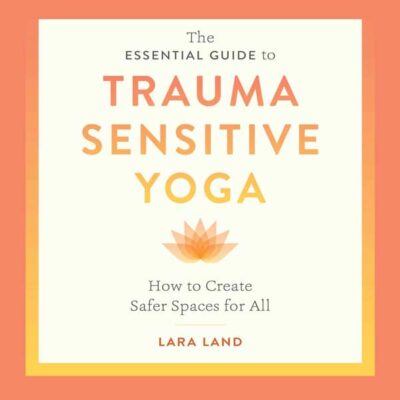
Many of you have likely heard about trauma sensitive yoga by now. You may even have read books on it such as The Body Keeps the Score, Waking the Tiger, and Why Zebras Don’t Get Ulcers. Perhaps you’ve pre-ordered my book, The Essential Guide to Trauma Sensitive Yoga. I hope you have. Yoga for trauma studies are getting more and more popular and more information is getting out there during this time when more folks than ever are identifying as having survived trauma or traumatic stress.
This is a change from the earliest studies we had which were largely from veterans. Most of the earliest trauma sensitive yoga programs were for veterans diagnosed with PTSD. Those programs proved again and again the power of trauma sensitive yoga to reverse the impacts of trauma, restore the nervous system and give folks a chance to change their response to traumatic stress.
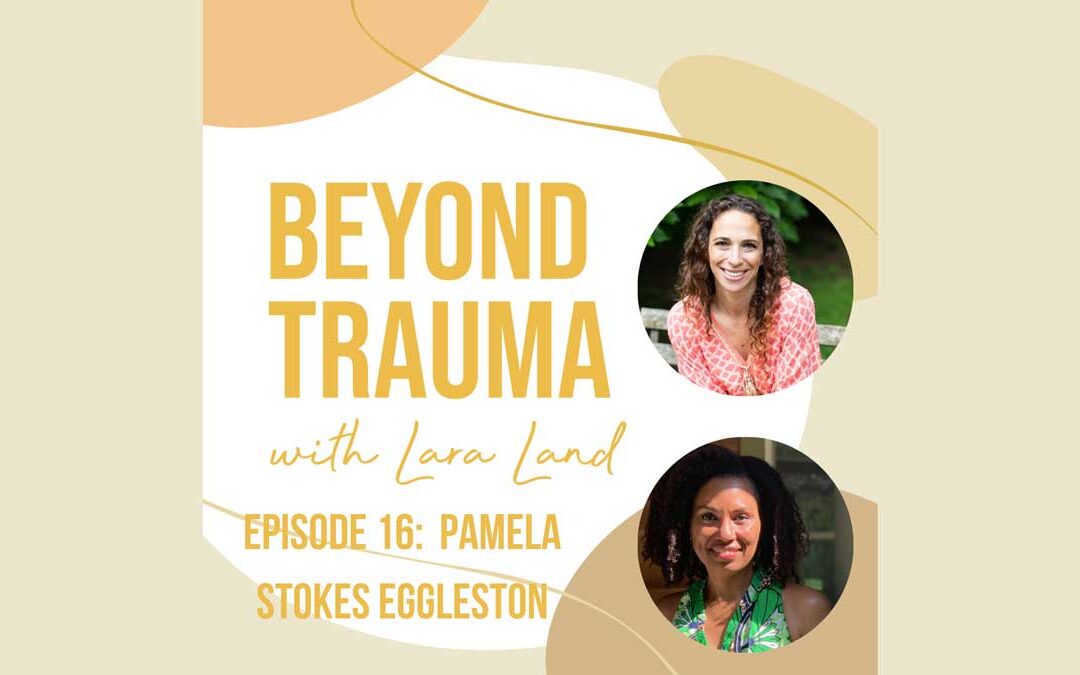
No one knows that better than the next guest of the Beyond Trauma Podcast. Pamela Stokes Eggleston has been sharing yoga years with Veterans suffering from PTSD or traumatic stress and their families. She was inspired to focus on this demographic after her own husband returned injured from service and she needed to learn how to live with that. The vicarious trauma she experienced from living with someone with PTSD also had to be addressed. Pam was able to address it with yoga and yoga related practices and one thing she was especially able to treat is sleep. This is deeply important because sleep is always disturbed with trauma and sleep disturbance makes the impacts of trauma more severe.
Take a listen to Pam on the Beyond Trauma Podcast to learn more about yoga for veterans and how she is improving their sleep and hers with some special practices.
If this resonates with you, you may want to consider a trauma sensitive yoga training. I’m offering both an online trauma sensitive yoga training (this weekend) and in many person trainings in the coming year including the weekend of June 30th at Kripalu in Massachusetts (which will be listed next week) and the weekend of August 18th at Miami Life Center, in Florida. More to be listed soon!
by Lara Land | Nov 21, 2022 | BOOKS, COACHING, COMMUNITY, LAND BLOG, LARA LAND, Self Improvement, SELF-IMPROVEMENT
Much has been written about morning rituals and morning routines and for good reason. How we start the day informs the rest of the day. It is so deeply important. So much so, that even if I’m exhausted I will try my absolute best to get up before my daughter and husband to have even a few minutes to collect myself, give thanks, and get clear about my day.
Do not sleep on these moments!
I used to do a full Ashtanga Yoga practice as my morning ritual, a routine that lasted almost two hours with set up and break down. A combination of motherhood, covid, and revelations about the Ashtanga yoga founder changed that. Covid specifically caused me and many yoga practitioners and teachers I know to question and reconfigure our practices. What is the right morning practice and when is the time to change it? These are not easy questions by any means. They require thought as does anything we put our time and focus to.
Discipline is important as is sticking to a practice.
Yoga can teach us about discipline. Discipline is an important part of our evolution and can teach us about false perceptions of our limits and the heights we can reach. It can also be destructive when it pushes us too far and causes us to distrust important messages from our bodies. When is the time to give up on a practice that’s been beneficial? That’s a question only you can answer, but I’ll give you some hints to look for.
It may be time to switch up your practice if:
- Your life has had a dramatic shift.
- You’ve tried adapting it and you still don’t feel you are growing.
- You are clear that it isn’t for lack of discipline or an inner block around something in your practice you don’t want to face.
If you have changed some small things but even that won’t do it. Maybe you need a bigger change in your morning routine or yoga practice.
The essential question to ask yourself is what you are hoping to gain from your practice.
There are many different reasons folks practice yoga or other centering morning rituals. Ideas of why you may be practicing include: comfort, stress relief, connection to something bigger, the doctor said so, stretching, peace, creativity, evolution, inner knowledge, prayer, awakening, excellence, better at the job, nicer human, healthier, stronger, focused, etc
Different rituals provide different results so first decide what you are practicing for. From there you can figure out if you need meditation, yoga asana, pranayama, journaling, silence and stillness, stretching, prayer, nature, cold shower, morning pages, or other practices. You may need ten minutes or two hours to get the results you wish. It all depends. Just keep in touch with something.
On the last episode of the Beyond Trauma podcast, Michelle Casandra Johnson and I talk about morning rituals and how these changing times are calling us towards new practices.
Take a listen HERE.
by Lara Land | Sep 26, 2022 | LAND BLOG, LARA LAND, SELF-IMPROVEMENT
When I was six I wanted to be a Pediatrician.
My parents got such a kick out of me saying the word, that I knew it must be important and to keep saying it. Plus, I loved my doctor. Kids have lots of career goals at age six from the imaginal: mermaids, princesses, and superheroes, to the understandable: mom or dad or mom and dad, to (if you’re my kid) pilot (she calls it plane flier) or astronaut (which she calls rocket ship flier) and sometimes singer or dancer or “can’t I be it all, mom?!”
“When I’m older can I ___?” is our current favorite question.
What does what we wanted to be when we were young teach us about our current career goals? This can range from a little to a lot. We don’t really know much about ourselves when we are young, nor about the job opportunities we see, and even less about how realistic our ideas are based on the education needed, the job market, and other limiting factors. On the other hand, this native can be a tool for exploration and expansion of possibilities. Exploration into what we dreamed of and desired as a child can, for some, be eye-opening and while it may not point directly to a career that makes sense now, it can teach us about the qualities of the things we like to do or would like to do if given a chance either as a job or as a joyful hobby in our lives.
Hobbies, my friend are fantastic!
It’s not my most popular advice but it is important to remember that just like one person can’t fill all our needs, neither can one activity. Our careers can be fulfilling while not filling every box. In those cases what you might really be seeking is a hobby, sport, side gig, or project that you do for the love of it and not for money in return. Consider if you do turn your passion into entrepreneurship that you will likely be handling sales, management, and vision, not actually working on your passion.
Another great way to find fulfillment is getting more involved in nonprofit and volunteerism. This has so many benefits both for self and for others and there is no lack of need. There are also plenty of clubs, activity groups, and other outlets for self-development out there that a simple search can find.
If you have considered all those possibilities, and career-boosting is what you find you truly want and need, it’s time to take a look at a few things: your talents, skills, and experience, the opportunities out there, and where those align or need some help aligning.
Giving some time to explore these three categories is going to clarify a ton for you. You can explore through reading, informational interviews, imagining, and trying out before you jump in at full risk. A life-coach or counselor can be really helpful here. They can see talents in you that you might be missing and often know of career paths that are more interesting and hidden. They can also give you an honest sense of what kinds of classes, courses, or other continuing education you should pursue to land that job of your dreams.
If you’ve been struggling with career issues, my six-week life-coaching workshop will Wednesdays Oct 12 – Nov 16 7-8:15 pm will address this from all levels, your non-negotiables and wiggle room, and everything you need to know to have a fulfilling life! Check out also how tools like this one could help you learn more about yourself and what you like to do!
by Lara Land | Sep 19, 2022 | LAND BLOG, LARA LAND, SELF-IMPROVEMENT
Those of you who have been following my trajectory know that nature immersion has become a central component of my yoga, wellness, healing routine. The healing powers of the outdoors have been obvious to me for some time as they apply to each of us regardless of our trauma. Getting to understand why from a scientific lens and how to maximize these benefits for myself and others has been an insightful and creative process that I am still in and hope to remain in for sometime. It’s been affirming to see, as I pursue my masters, that the therapeutic aspects of being outdoors are endorsed, though still in their early stages, in the counseling field.
During this time of expanded knowledge seeking in the living non human world I have taken on a few teachers and a few fundamental practices.
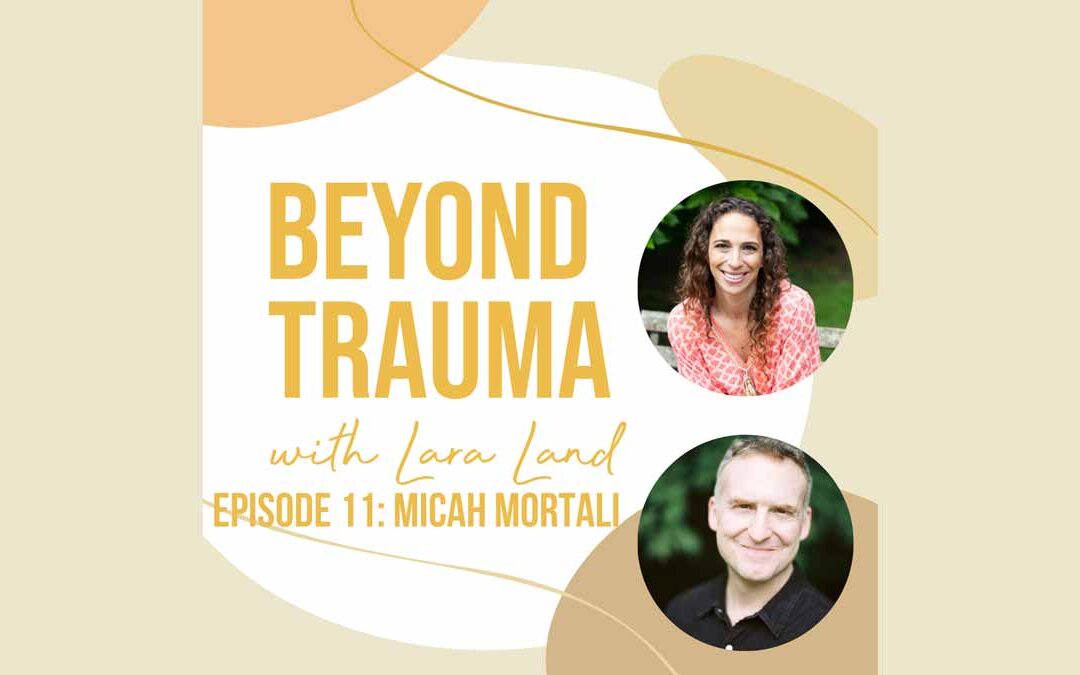
I’ve studied with Mark Coleman, author of Awake in the Wild, Marguerite Ulmann-Bower of Plant Pioneers, and Micah Mortali, author of Rewilding and Director of the School of Mindful Outdoor Leadership at Kripalu. Each of these teachers has contributed to my deepening relationship with the land, all the living beings on the earth and with myself. I merge their practices with my 2+ decades of yoga, breathwork, mindfulness, and coaching to invite healing, acceptance, and growth into the lives of my students most notably on retreats here in the Great Catskill Mountains.
Today, I feel so grateful to have Micah Mortali on the Beyond Trauma Podcast. In his episode, we discuss the impact of just a short time outdoors on the nervous system and the power of reconnecting with our natural home, the outdoors. I share some personal experiences allowing the earth to take my stress and the great joy of working with Micah to learn more about outdoor skills, survival skills, ancestral skills, and healing trauma in nature.
I so hope you enjoy this episode which you can listen to on iTunes, Spotify or anywhere you listen to podcasts.
You can expect much more from me on this topic in the coming years and join me this October in upstate NY for a taste of what we talk about today. Details HERE.